

Gingerbread Week in the Classroom: What Books Should I Read and How Do I Use Them?
I am very willing to build a week around a cookie. I would just like that cookie to help me teach something before he runs off.
Give me a good read-aloud, one question worth discussing, and a follow-up that gets children talking, thinking, and creating. The gingerbread man can supply the drama. December has already supplied the rest.
If you are planning Gingerbread Week for kindergarten or first grade, these nine books give you several ways in: a familiar chase, a clever new ending, a very determined baby, and a few cookies with serious construction needs. Below, I’m sharing what I would teach with each book, the question I would ask, and which of my gingerbread resources I would use next.
You do not need all nine books. Choose one classic, then add the versions that fit your teaching goals. I’ve included a five-day plan near the end so this does not become a second job with frosting.
As an Amazon Associate I earn from qualifying purchases. This post contains paid links to books on Amazon. If you purchase through them, I may earn a commission at no extra cost to you. The classroom resources linked below are my own products on TPT.
For the bigger picture, my Gingerbread Week activities for kindergarten and first grade post walks through all eight resources, center ideas, and classroom setup. This post is the read-aloud companion: which book, which teaching move, and what to do afterward.
Which gingerbread books should I choose?
- For a first retelling: choose one traditional The Gingerbread Man or Karen Schmidt’s version. You can save Jim Aylesworth’s version for a comparison or baking-writing connection. All book links are paid links.
- For comparing endings: add The Gingerbread Girl (paid link).
- For a writing or building project: choose How to Catch a Gingerbread Man or The Plan for the Gingerbread House (paid links).
- For a sweet Friday finish: read Gingerbread Baby before an adoption activity. Save Gingerbread Friends for a follow-up read (paid links).
- For a school-day twist: try The Gingerbread Man Loose in the School (paid link). This cookie wants to find his class, which changes the whole conversation.
How I would make the read-aloud do the teaching
Before I reach for the scissors, I want children to understand the story. A cute craft can extend a lesson, but it cannot answer the comprehension question for them. The googly eyes are doing their best.
- Pick one focus. On a first reading, help children follow the character, problem, and ending. On a reread, look more closely at a choice, a clue in the pictures, or a change from another version.
- Plan a few useful pauses. Model one thought aloud: “I think this plan might fail because…” Then ask children what they notice. Leave enough uninterrupted reading for the story to make sense.
- Let children rehearse an answer. A partner conversation gives more children a turn than calling on the same three enthusiastic hands. Follow with “What in the words or pictures makes you think that?”
- Give the response a purpose. Retell the important events, explain a character’s solution, or write directions someone could follow. Children can point, draw, dictate, or write, depending on the support they need.
For the teaching behind this routine, the Institute of Education Sciences’ K–3 reading-comprehension guide recommends explicitly teaching story structure, modeling thinking, and using focused discussion. Those ideas guide the classroom pairings below.
One chart is enough: keep a class chart with character, problem, and ending. Add a row after each book and revisit earlier rows before you compare. Later, add setting or repeated words if those are your focus. Reading nine versions should not require nine nearly identical worksheets.
1. The Gingerbread Man, illustrated by Gail Yerrill
Illustrated by Gail Yerrill • Padded picture-book edition
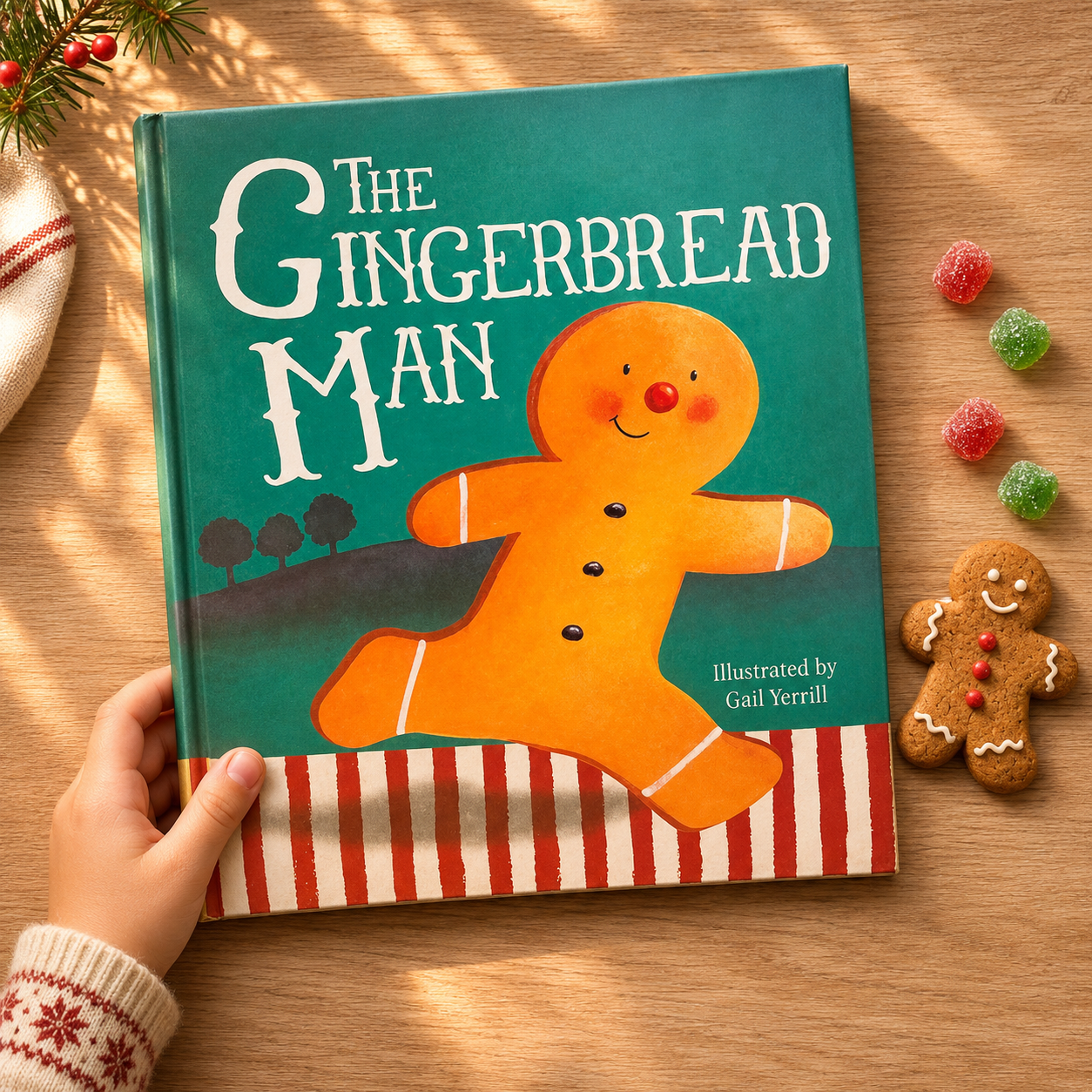
This traditional chase gives children a familiar pattern to recognize in later versions: a gingerbread man runs away, a growing group follows, and a fox changes the outcome. A small cookie with a very large amount of confidence.
Read it for: identifying a problem and connecting events. The river creates a practical problem for this cookie, which also gives you an opening for science.
Ask: “Why does the gingerbread man need help at the river? What happens after he accepts it?” Then separate the story from a testable question: “What would happen if a real cookie went into water?”
Pair it with my Gingerbread Investigations. Observe and describe a dry cookie first. Use one class cookie for the water test while children’s own cookies stay dry. Ask children to predict, observe at agreed points, and draw or dictate what changed. Use words such as wet, soft, or crumbly if those match the evidence. A cookie breaking apart in water is not the same thing as melting.
Keep any tasting separate from the experiment and follow school food rules and individual allergy or dietary needs. Never eat the water-test cookie. The question at the end is “What did we notice?” rather than “Who guessed correctly?”
2. How to Catch a Gingerbread Man
Adam Wallace • Illustrated by Andy Elkerton
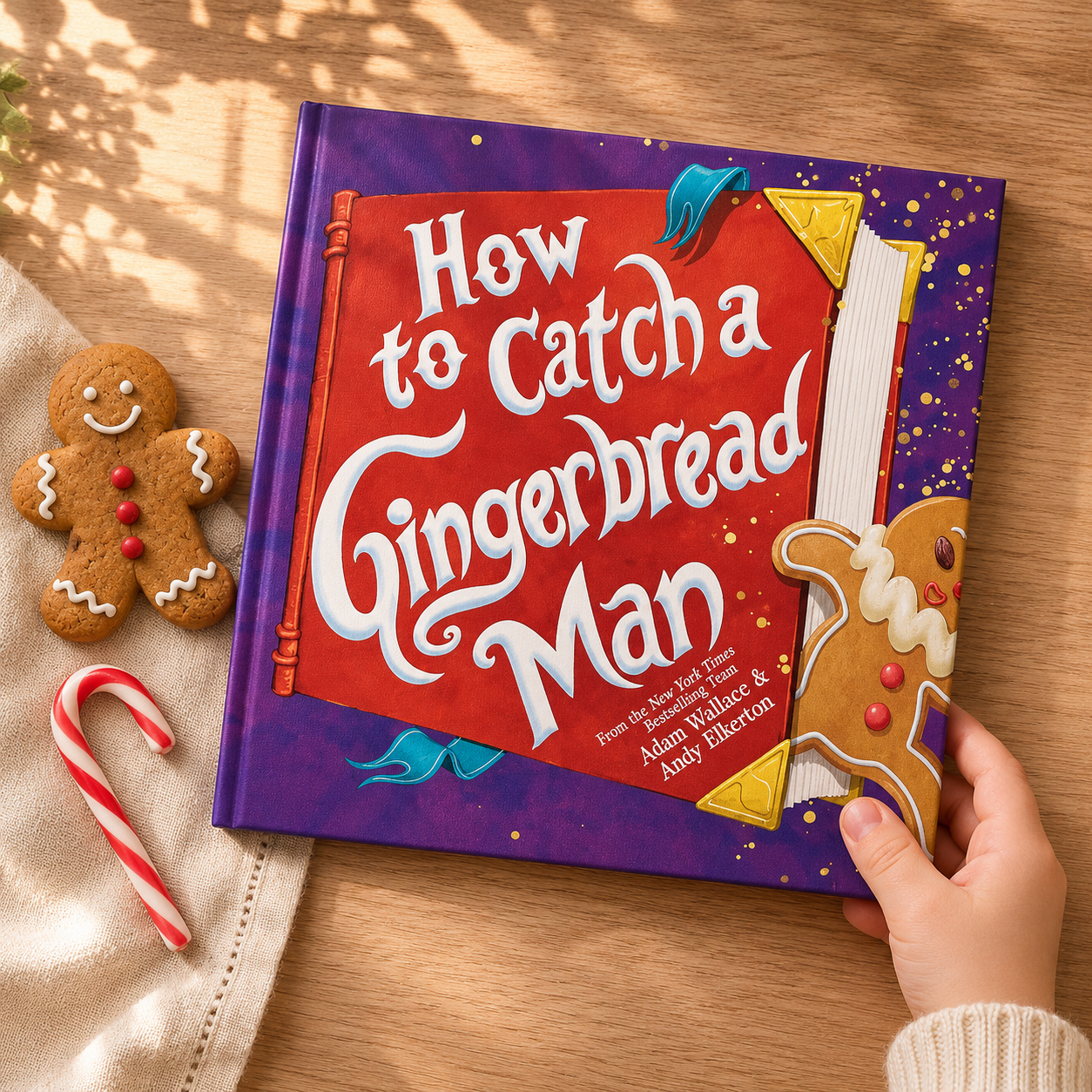
The trouble starts at a bookstore storytime, where a gingerbread man escapes and familiar storybook characters get involved in the chase. That setting matters: this is a bookstore adventure, not the school adventure farther down the list.
Read it for: explaining a plan and noticing why an attempt does or does not work.
Ask: “What would your plan need so the gingerbread man could get inside, but not simply run out?”
Try it: have children draw a pretend cookie-catching plan and explain it to a partner. The partner asks one practical question: “What happens next?” or “What keeps him there?” Then children add the missing detail. Apparently even imaginary cookies need us to be specific.
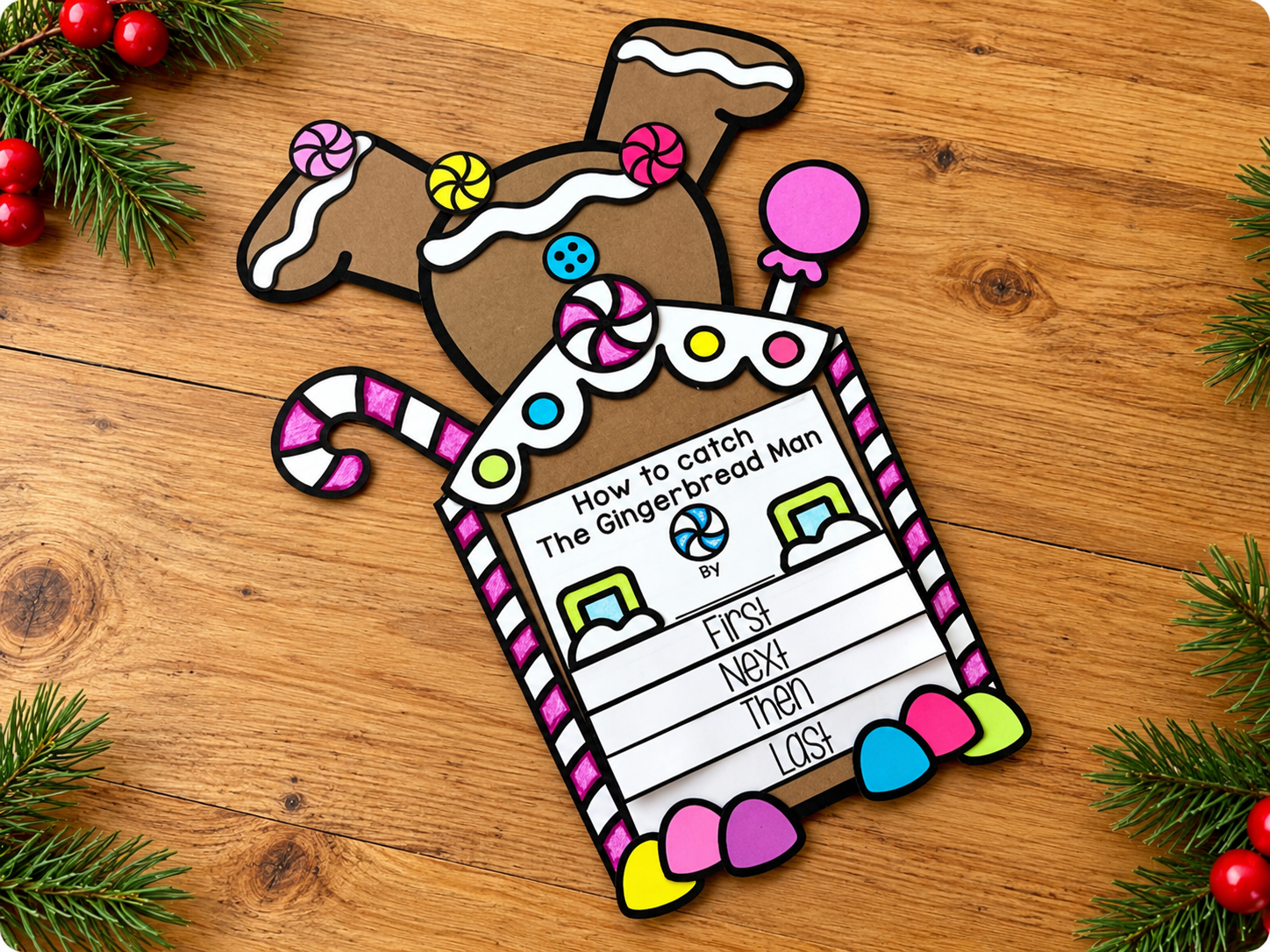
Pair it with my How to Catch the Gingerbread Man writing craft. Let children rehearse their directions aloud before writing or dictating. Choose the writing option that fits your students. A clear, revised plan is the goal; building a physical trap is optional and would require your own materials.
3. The Plan for the Gingerbread House: A STEM Engineering Story
Darcy Pattison • Illustrated by John Joven
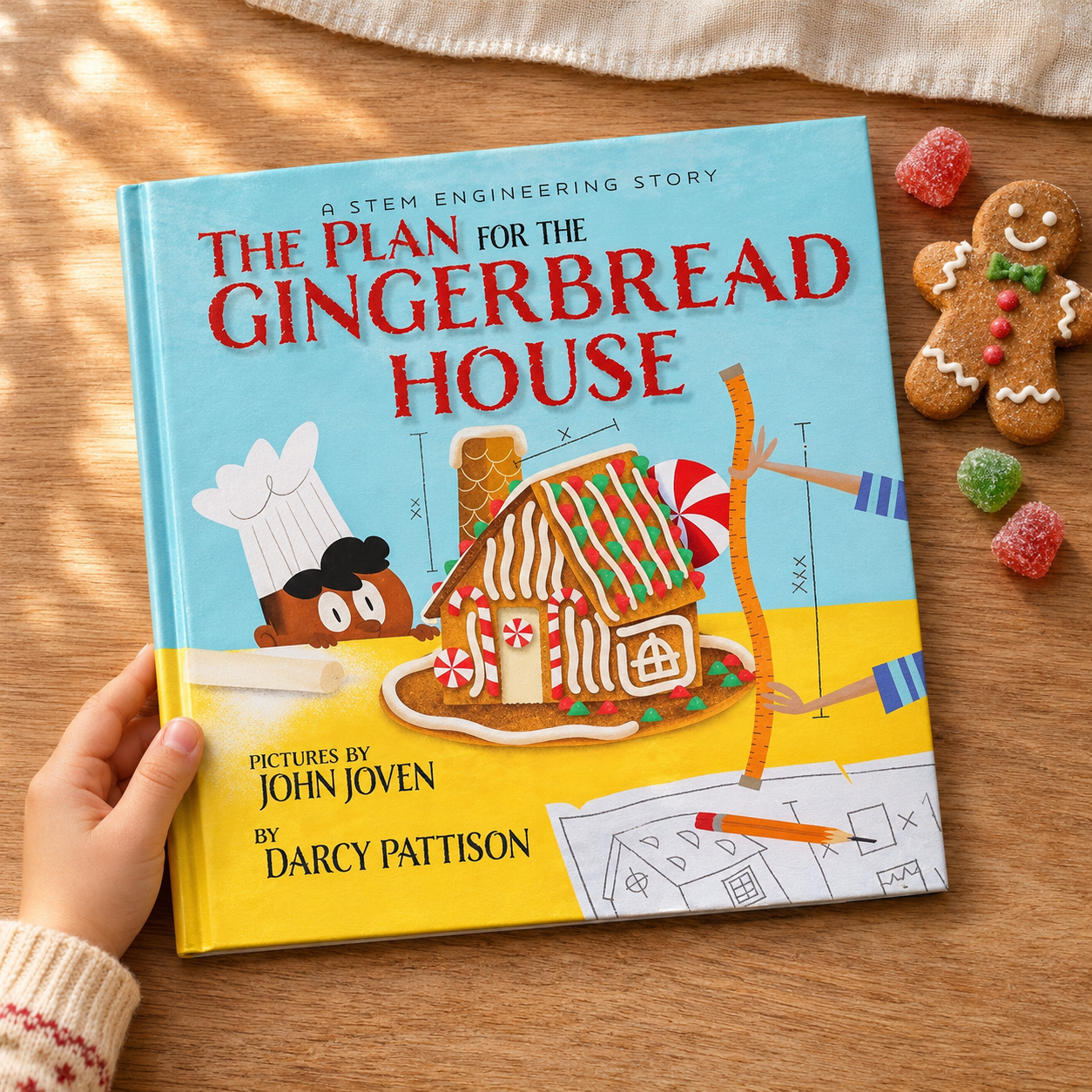
This cumulative engineering story follows a gingerbread-house project through problems that call for another attempt. The house has to stand and make room for its gingerbread residents. As it turns out, wishing very hard is not a building material.
Read it for: connecting a problem, a design choice, and a revision. For younger listeners, preview a few words such as plan, support, and revise, and keep your first discussion focused on one construction problem.
Ask: “What changed in the plan, and how did that change help?”
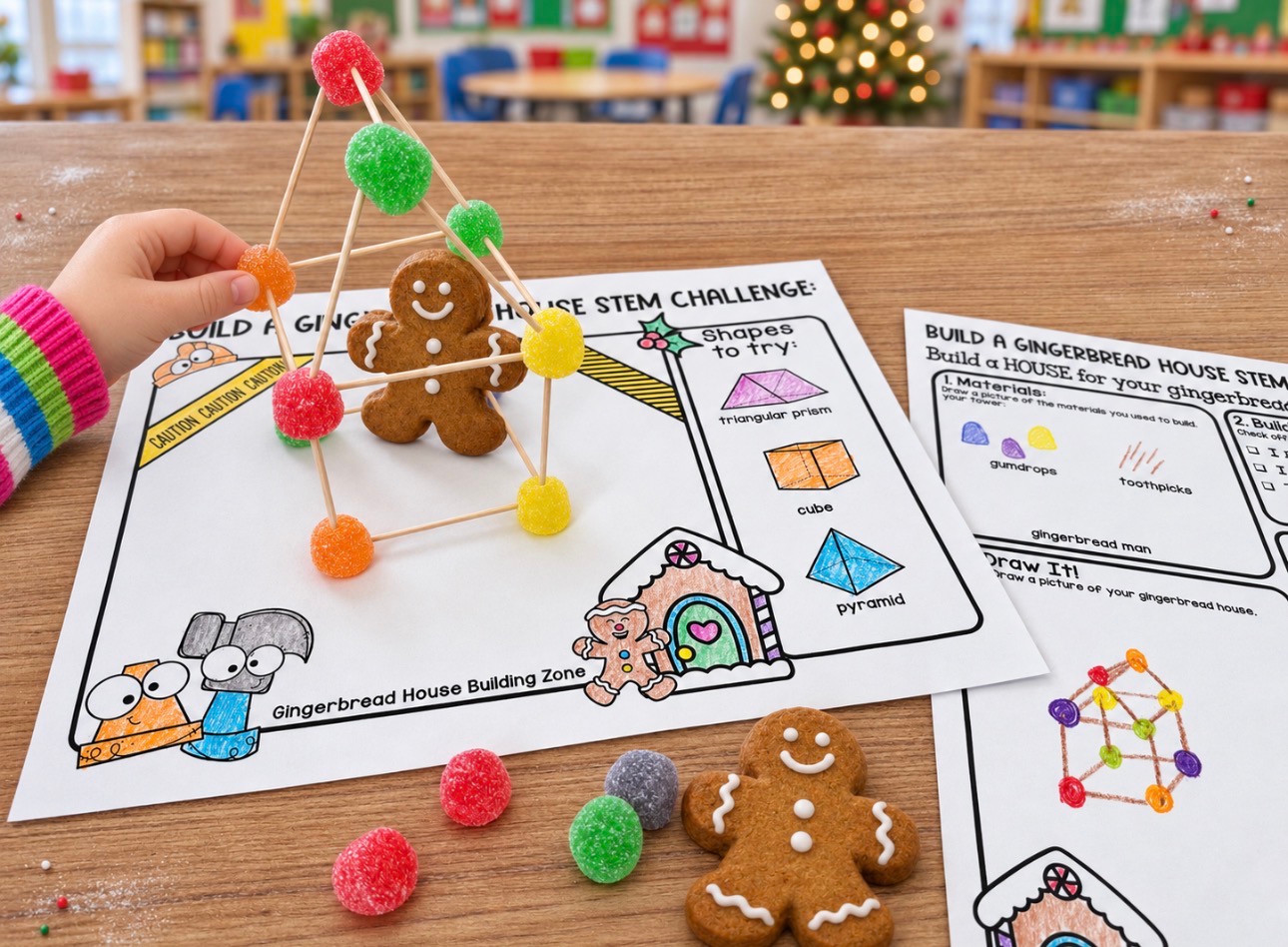
Pair it with my Gingerbread Gumdrop Math and STEM activities. For the gumdrop-and-toothpick house challenge, set a simple goal before handing out materials: a structure that stands on its own and has space for a small paper gingerbread character. Have children draw, build, test, change one feature, and explain the change. Model safe toothpick handling and supervise closely; use appropriate nonfood materials when needed.
That problem–plan–test–revise sequence connects to K–2 engineering-design practices. For a paper option, my Build Your Own Gingerbread House includes 3D and fold-open crafts with writing. A prepared template is a construction craft; to add engineering, offer a genuine design choice and something children can test.
4. Gingerbread Baby
Written and illustrated by Jan Brett
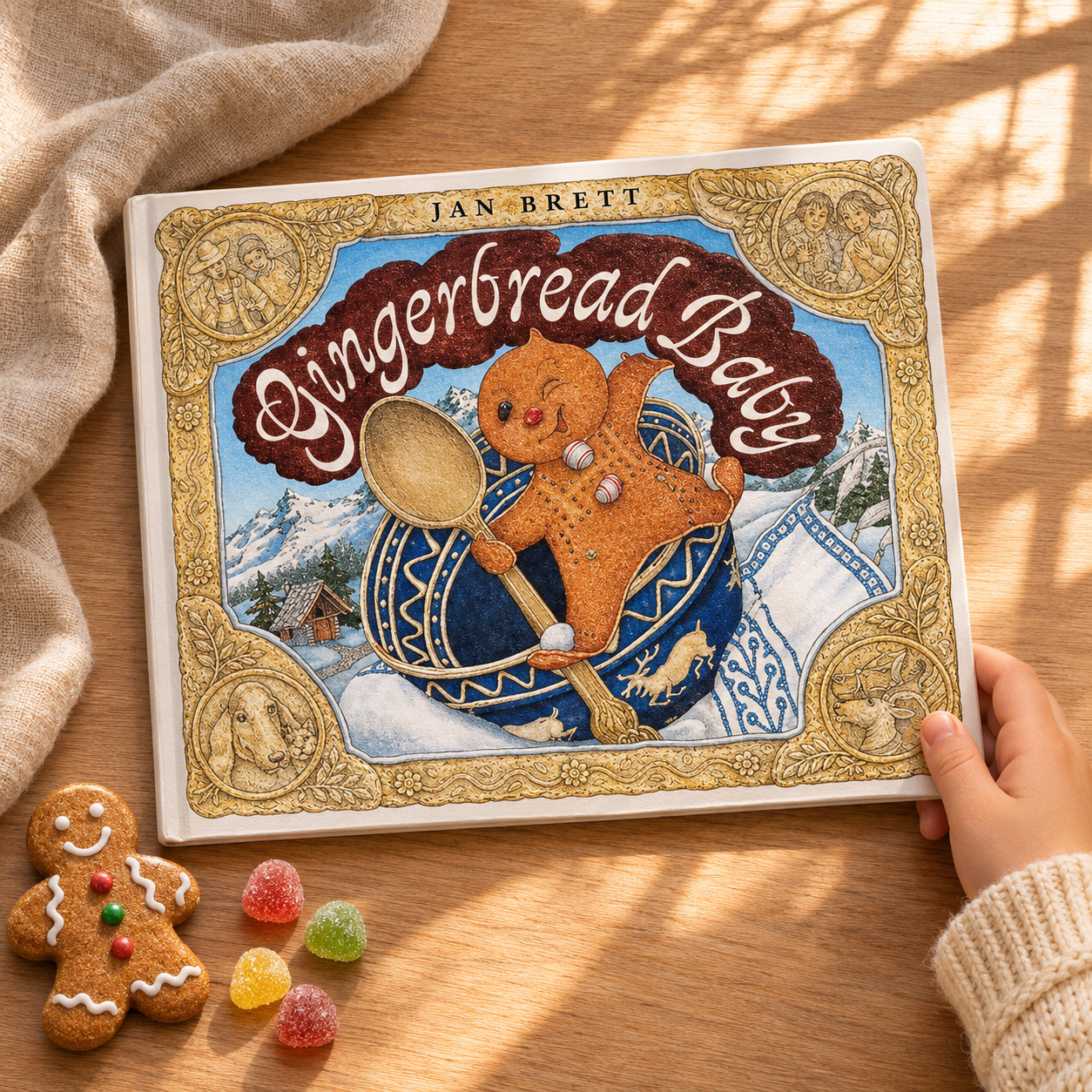
Matti opens the oven too soon, and out comes a gingerbread baby with places to be. While other characters chase him, Matti works on a different solution. Look at the borders: Jan Brett gives readers clues about his plan there.
Read it for: using illustrations as evidence and explaining how a solution fits a problem.
Ask: “What is Matti doing that the other characters are not? Why does his plan work?”
Try it: reread the ending and revisit the border pictures. Invite children to point to a clue and explain it: “I think Matti is ___ because I see ___.” Then ask what a gingerbread baby would need in a home.
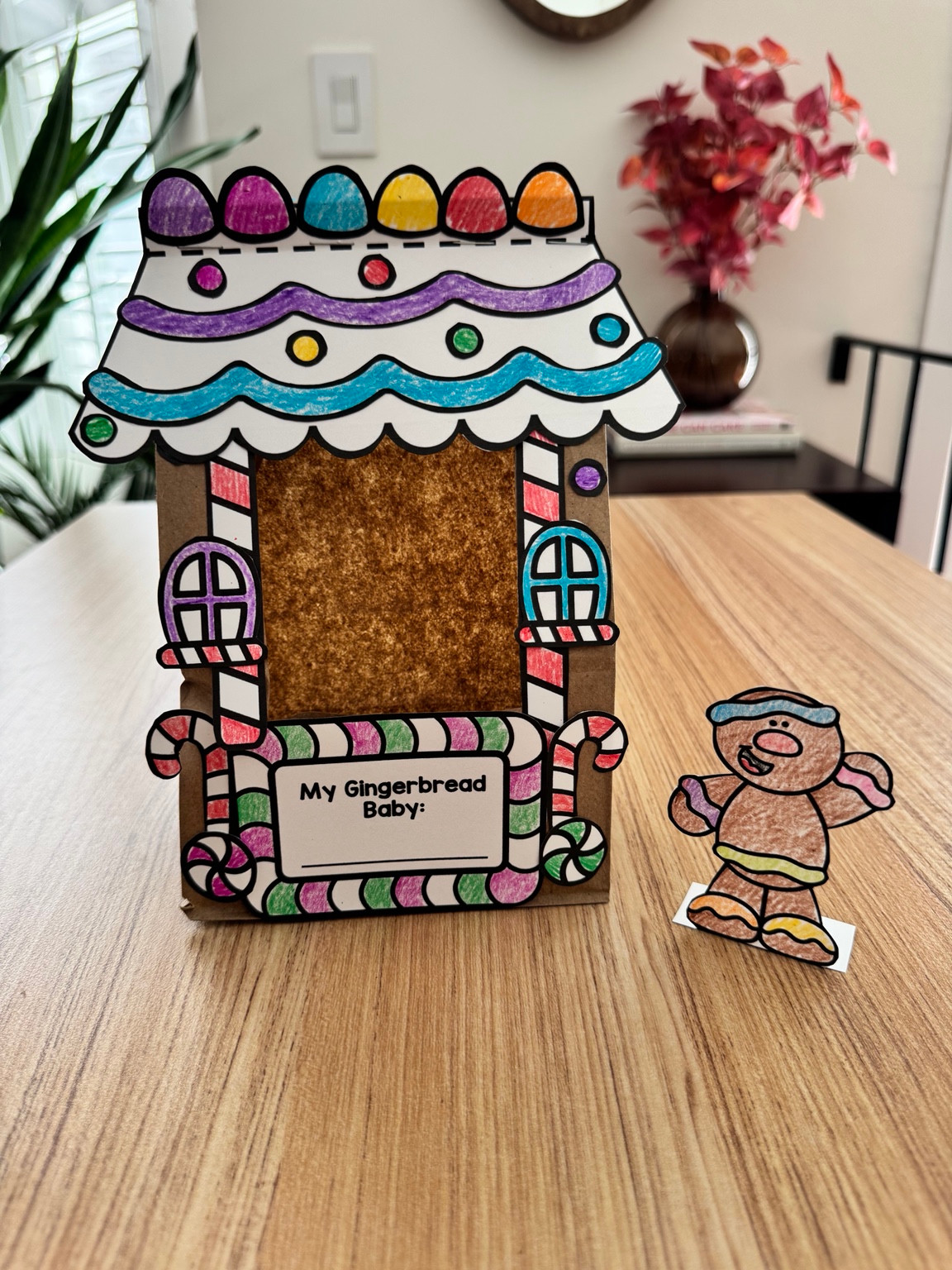
Pair it with my Adopt a Gingerbread Baby writing and house activity. Children can name a printable paper baby, complete an adoption certificate, and work on the mini creative-writing baby book before giving the baby a paper-bag house. Model a page, then invite drawings, labels, dictated sentences, or writing. Naming the baby is fun. Explaining the baby’s home or care gives the writing somewhere to go.
The printable paper babies keep this food-free. Cookies or small stuffies are optional, not required. I am in favor of a Friday baby who does not need a snack or a nap schedule.
5. The Gingerbread Girl
Written and illustrated by Lisa Campbell Ernst
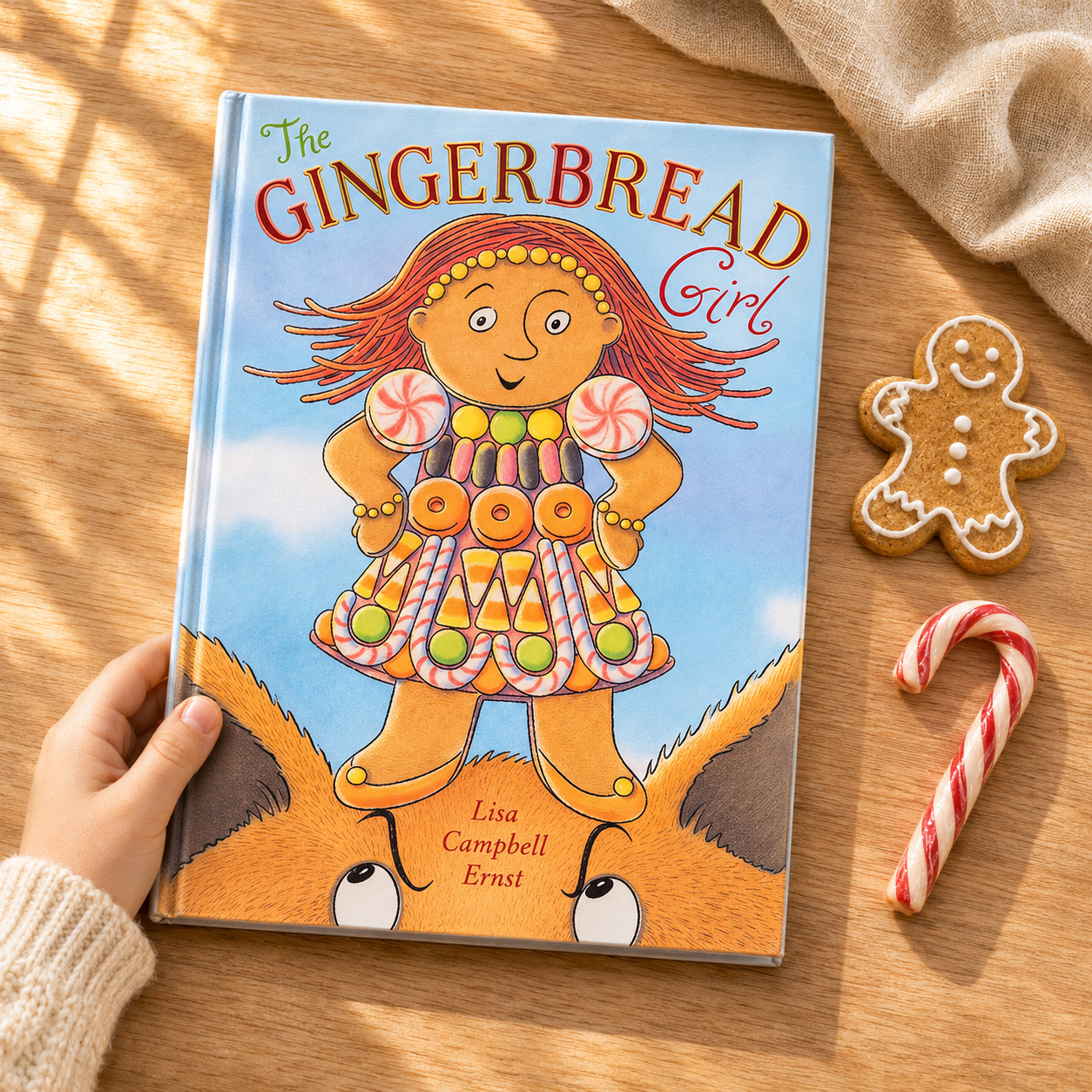
The gingerbread girl faces a familiar fox, but she has her own plan. Her choices lead to a different ending, making this a useful follow-up to a traditional gingerbread-man story. Finally, someone has reviewed the fox situation.
Read it for: comparing a character’s actions and their consequences.
Ask: “How does the gingerbread girl’s choice change the ending? Which part of the story shows that?”
Try it: place the two books beside your class chart. Have partners complete “They both ___, but ___.” Then go one step further: “The ending changes because ___.” Encourage children to check a page rather than rely only on memory.
Pair it with my Shape Gingerbread math craft as a math extension. Children make a shape gingerbread character, name the shapes, count each shape once, and record or graph their totals. Have a partner check the count against the finished craft. Keep the distinction clear: the story conversation is about choices and endings; the craft practices shape recognition and data recording. Both can earn a place in the day.
6. Gingerbread Friends
Written and illustrated by Jan Brett
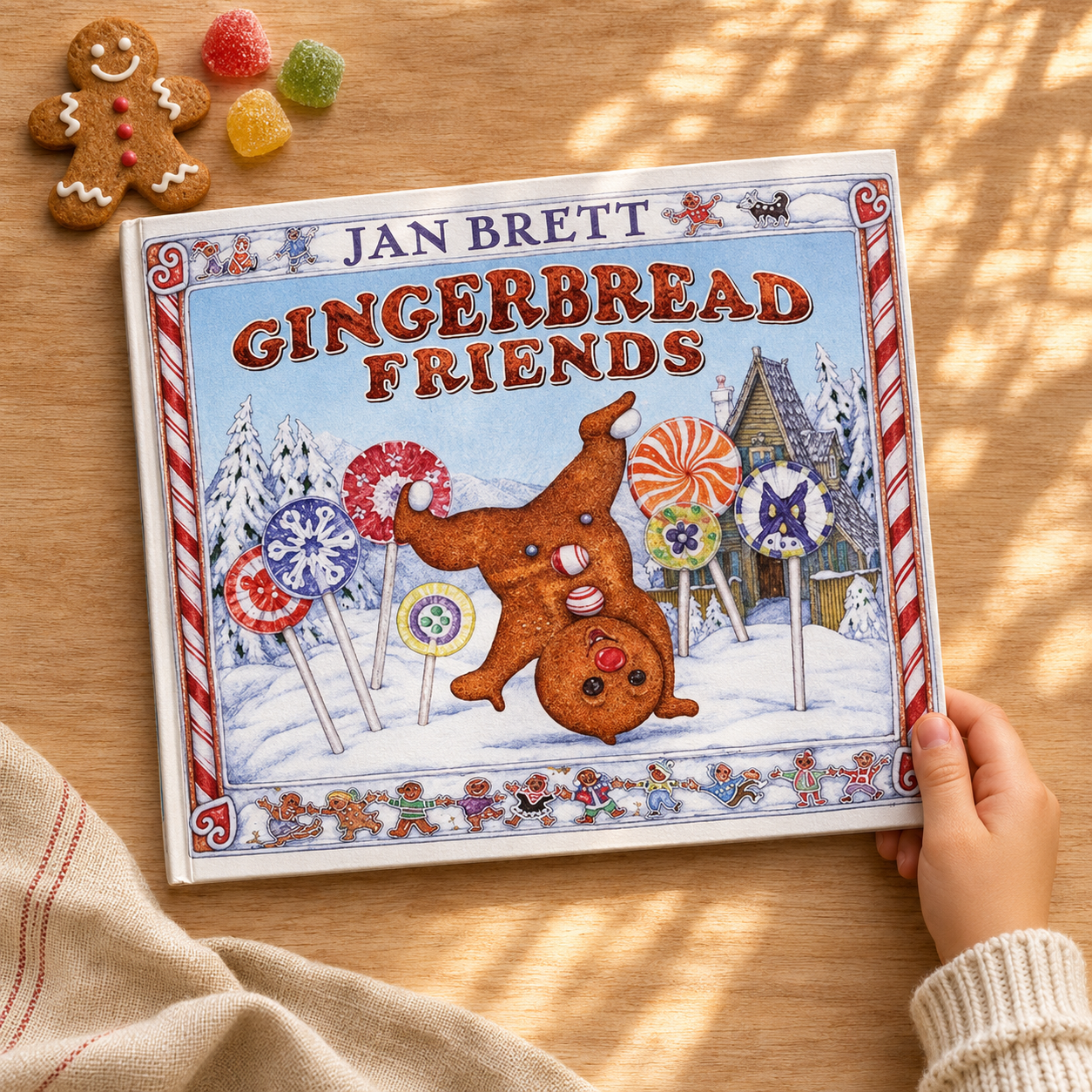
In this follow-up to Gingerbread Baby, the little cookie goes looking for friends. The bakery treats he encounters do not answer him, and his trip home leads to a surprise from Matti. The border illustrations are worth another close look.
Read it for: tracking a character’s feelings and connecting picture clues with the ending.
Ask: “How does Gingerbread Baby feel at the beginning and the end? What changes?”
Try it: choose two illustrations and have children explain a feeling with evidence. Be clear that the silent bakery cookies are not living classmates deliberately excluding him. Then move from the story to a real-life question: “What could we do to help someone join us?”
Pair it with my Build Your Own Gingerbread House. Use the fold-open house for a paper scene showing a gingerbread character and a friend. On a separate strip of paper, children can draw or write a concrete welcoming action: “I can invite someone to build with me.” If your class has already used the Gingerbread Baby adoption activity, this is a natural follow-up without setting up an entirely new event.
7. The Gingerbread Man, illustrated by Karen Schmidt
Illustrated by Karen Schmidt • Scholastic paperback edition
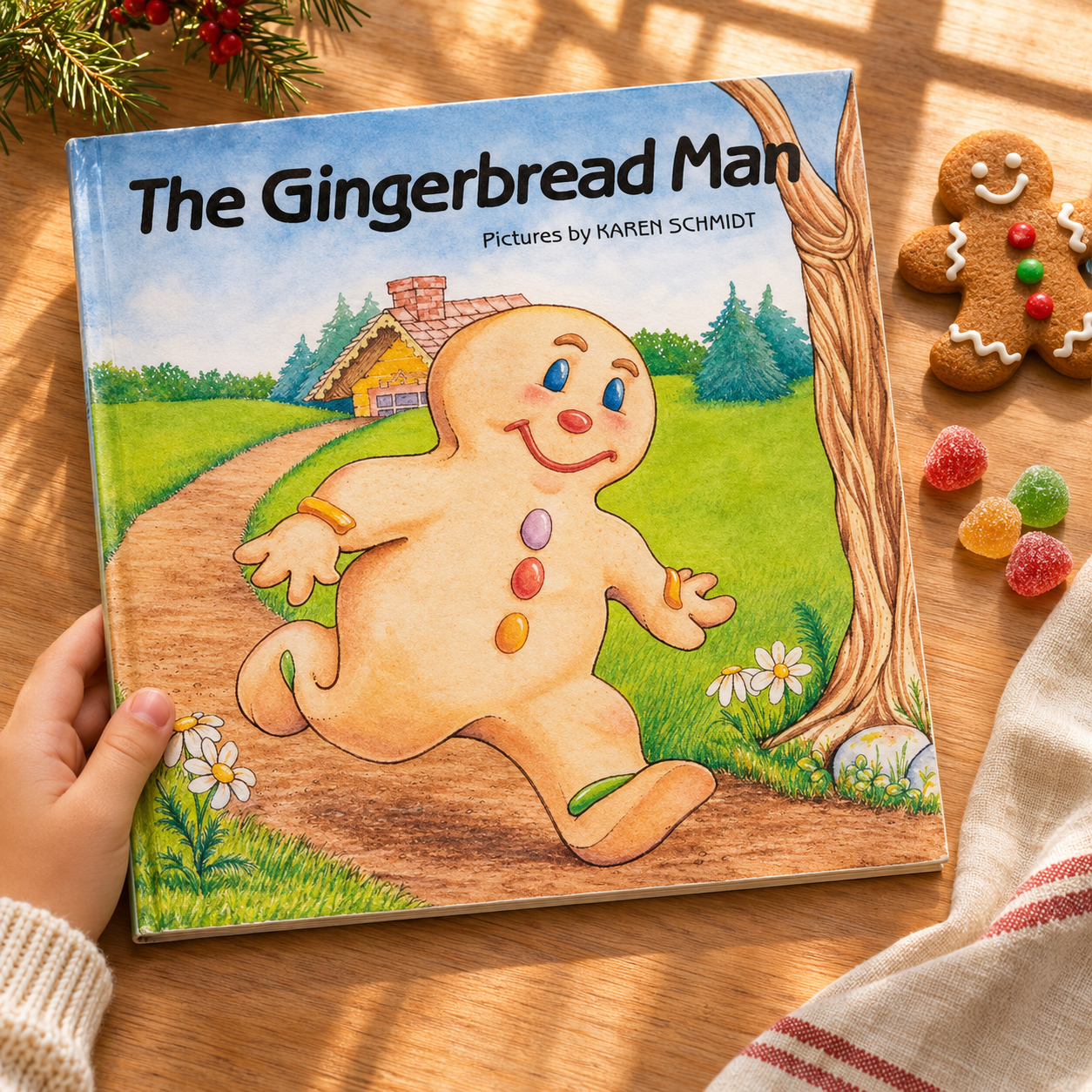
This traditional version works as your anchor story or as another telling to compare. Pay attention to the fox’s trick: here he pretends he cannot hear well and draws the gingerbread man closer. There is no river crossing in this version. Same suspicious fox energy, different plan.
Read it for: sequencing important events and comparing how a familiar story is told.
Ask: “How does the fox get the gingerbread man to come closer? What does the gingerbread man misunderstand?”
Try it: sketch three quick pictures for the beginning, the chase, and the ending. Model a short retelling, then let partners tell the story from the pictures. If you read the Yerrill edition too, compare the fox’s tricks instead of assuming the endings happen in exactly the same way.
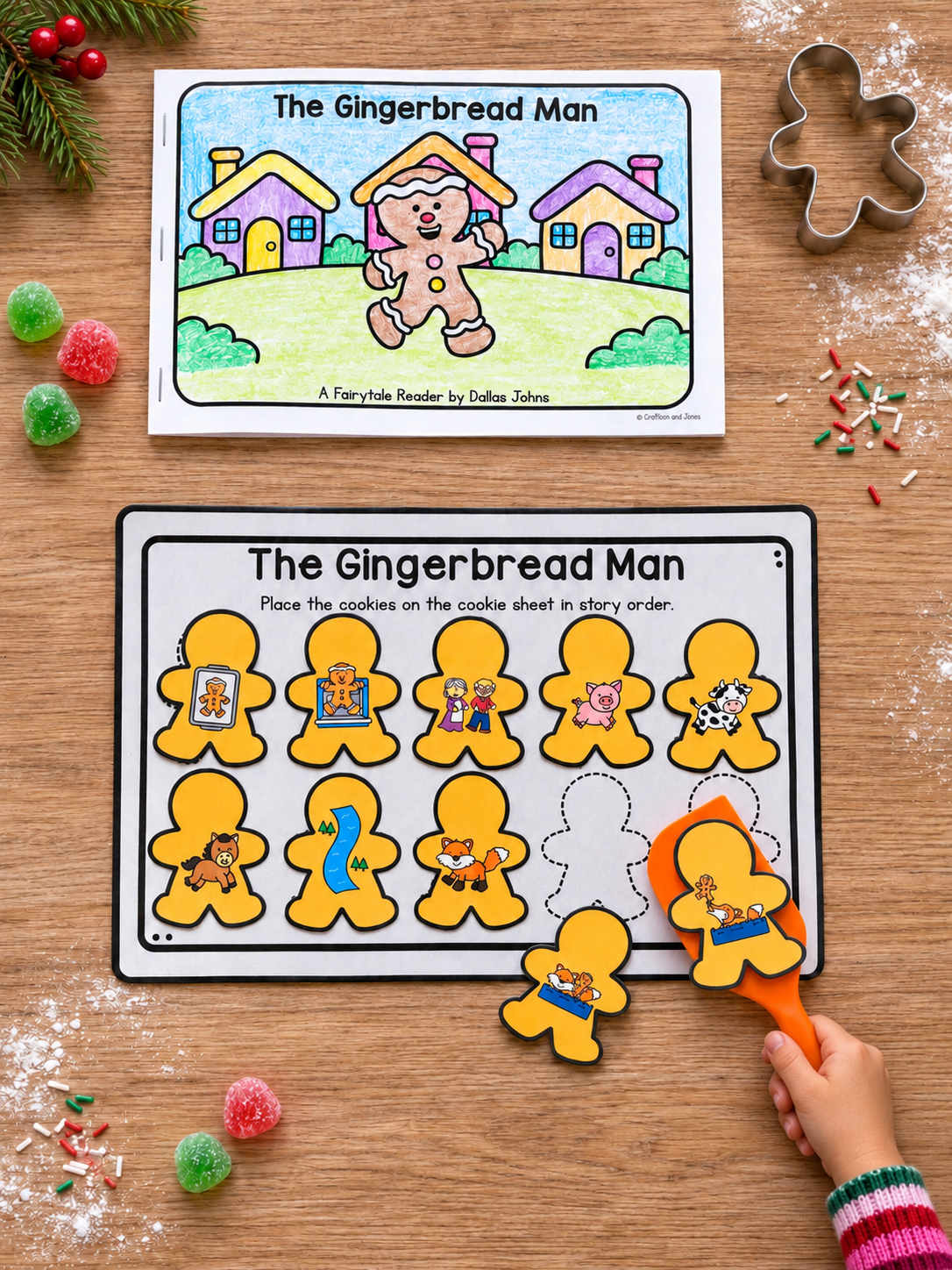
Pair it with my Gingerbread Man Story sequencing and retelling resource. Use the included reader with its matching cookie-sheet sequencing pieces, then compare that telling with your read-aloud. For retelling the published book itself, use children’s drawings wherever characters or events differ from the printable cards. Different gingerbread men bring different entourages, and the pictures should match the story children are telling.
8. The Gingerbread Man Loose in the School
Laura Murray • Illustrated by Mike Lowery
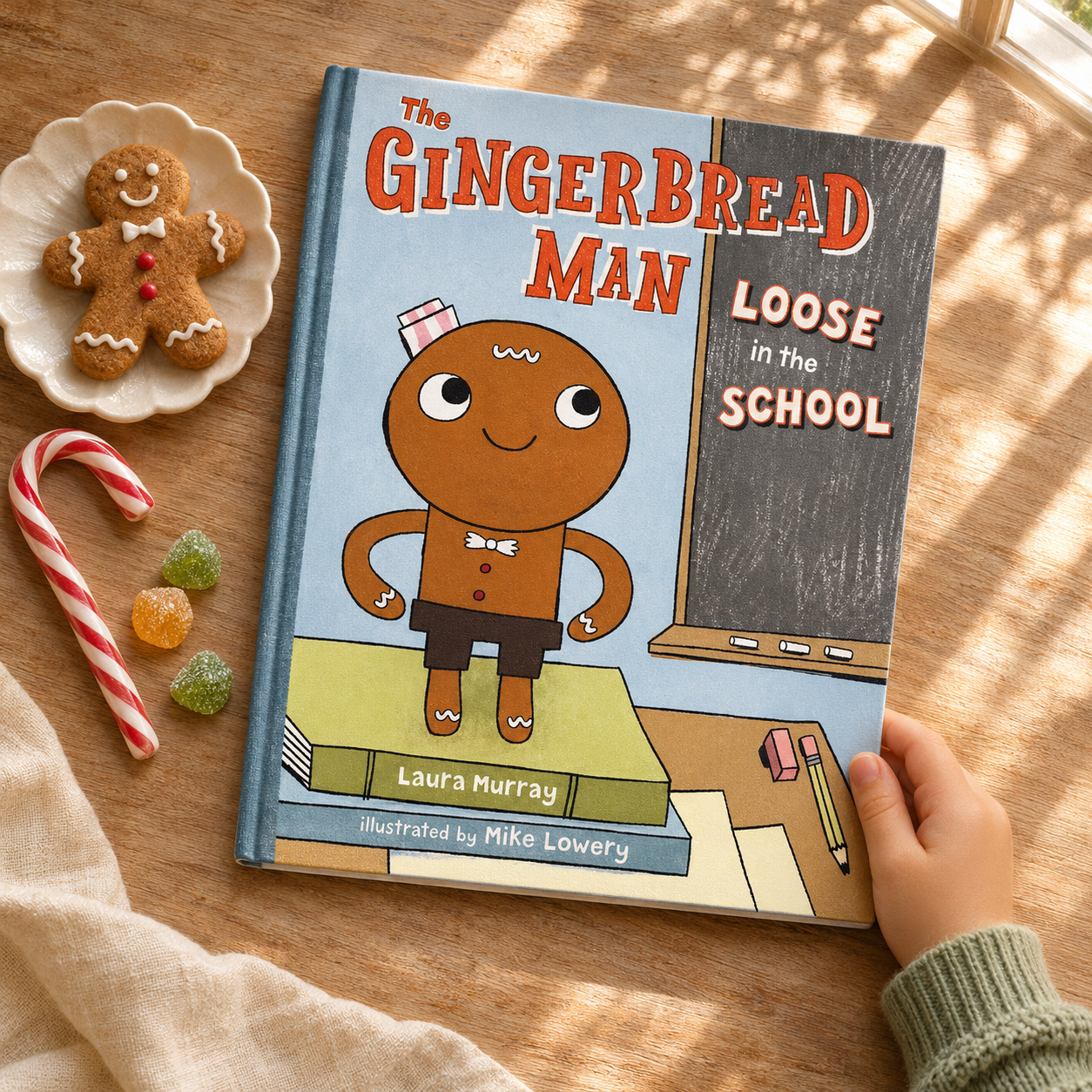
This gingerbread man is left behind when the children go to recess, and he sets off to find his class. He is trying to catch up with people, not get away from them. A small change in direction gives us a big change in character motivation.
Read it for: comparing what characters want and how that affects their actions.
Ask: “Why is this gingerbread man running? How is his goal different from the cookie in our first story?”
Try it: have children draw a few important places from his school journey and orally retell his search. Use their drawings rather than forcing a classic story’s character cards to fit this one.
Pair it with my How to Bake a Gingerbread Man reader and writing craft for a procedural-writing connection. The class’s baking at the beginning gives you a reason to switch from “What happened in this story?” to “How could we explain a baking process?” Read the included how-to reader, act out the steps, and rehearse them with a partner before using the planner, word bank, and writing pages. Explain that these are baking directions, not a retelling of the school adventure. Actual classroom baking is optional.
9. The Gingerbread Man, retold by Jim Aylesworth
Retold by Jim Aylesworth • Illustrated by Barbara McClintock • Original hardcover edition
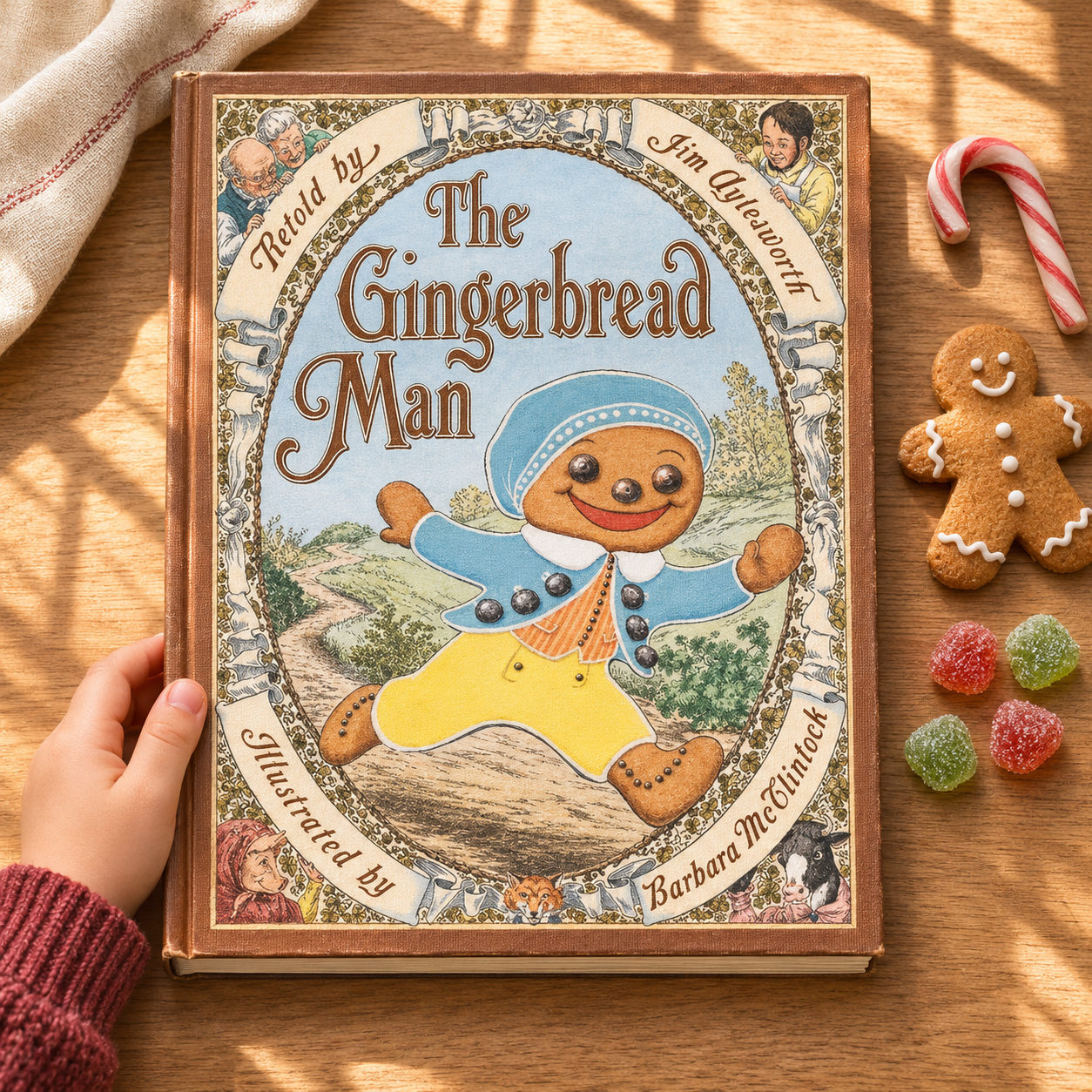
Aylesworth’s rhythmic retelling and McClintock’s illustrations make this another strong classic choice. The original hardcover also includes a recipe on the back cover, which gives you a useful bridge from story language to directions.
Read it for: noticing repetition, retelling, and distinguishing a narrative from a procedure.
Ask: “How are the story and the recipe organized differently? What does each help the reader do?”
Try it: after reading the story, look at the recipe together. Contrast telling what happened to the character with explaining what a baker should do. Children can join in with a familiar refrain on a reread, then orally sequence baking actions using first, next, and last.
Pair it with my How to Bake a Gingerbread Man writing resource. Model a clear first step, have children rehearse their own directions, and use the checklist to find a missing action before adding the oven craft. A partner should be able to tell what to do, not just admire the oven. Lovely ovens still need directions.
Edition note: the original hardcover, adapted board book, and StoryPlay edition are not identical. The linked book is the original hardcover. Use the features in the copy you actually have.
A five-day Gingerbread Week plan that leaves room to breathe
Here is one way I would use the choices above. Pick the main response for each day; the optional center can wait. We are planning a week, not trying to win December.
- Monday: Meet the classic. Read Karen Schmidt’s version or the Gail Yerrill-illustrated edition. Start the character–problem–ending chart, model an oral retelling, and use the story reader and matching sequencing pieces for follow-up practice. If you choose Yerrill’s river version, an optional science connection is the class cookie investigation.
- Tuesday: Change the ending. Read The Gingerbread Girl. Compare the main character’s choice with Monday’s story and explain why the ending changes. Optional math center: Shape Gingerbread.
- Wednesday: Make a plan. Read How to Catch a Gingerbread Man. Sketch, explain, question, and revise a plan with the How to Catch writing craft. If procedural baking writing is your priority, swap in Aylesworth’s classic or Loose in the School and use How to Bake instead.
- Thursday: Build and explain. Read The Plan for the Gingerbread House. Choose the gumdrop house STEM challenge or the paper house craft. Let children explain a design choice or revision; you do not need both projects.
- Friday: Find a home. Read Gingerbread Baby, revisit the border clues, and use Adopt a Gingerbread Baby for a writing celebration. Save Gingerbread Friends for a later read-aloud if your class wants more.
If you want every activity in the rotation, stretch the theme into a second week or choose a few small-group centers. My full Gingerbread Week post has the setup details and more ways to fit the eight resources into your regular routine.
A few things I would keep simple
Do I need to buy every book?
No. One traditional version and one contrasting story are enough for a useful comparison. Check your classroom or school library first, then choose additions for a specific purpose. A bigger book stack is fun; a clear plan is what makes it usable.
What if my students are not writing sentences yet?
Keep the thinking and adjust the response. A child can point to a clue, tell a partner, arrange matching pictures, draw an event, dictate a sentence, or label a plan. Offer a sentence frame and model it once. Students who are ready can explain why, add evidence, or revise a direction that a partner found confusing.
Can I do Gingerbread Week without food?
Yes. Use the paper babies, paper houses, shape craft, readers, and writing activities. Skip tasting and the cookie investigation if food does not fit your setting. There is no requirement to introduce frosting into your carpet.
Want the activities ready when you close the book?
My Gingerbread Activities Bundle brings together all eight resources used in these pairings: story sequencing and retelling, how-to baking writing, gumdrop math and STEM, gingerbread investigations, shape math, paper houses, catching-plan writing, and gingerbread baby adoption.
Choose the pieces that match your students and the books you already have. The books and classroom supplies are separate; the bundle brings the printable activities together.
See the Gingerbread Activities Bundle on TPT
Need to see how the centers and projects fit together first? Start with my complete Gingerbread Week activities post.
A little cookie drama, a lot of good conversation, and a plan you can actually use. That is my kind of Gingerbread Week.
Which gingerbread story gets the biggest reaction in your classroom? I’d love to know which version belongs on your read-aloud stack.