

Gingerbread Science Activities: A Cookie Investigation for Little Scientists
December science can start with one very important question: what happens when a gingerbread cookie gets wet? You know the gingerbread man has opinions about crossing that river. Now your students can investigate the cookie part for themselves!
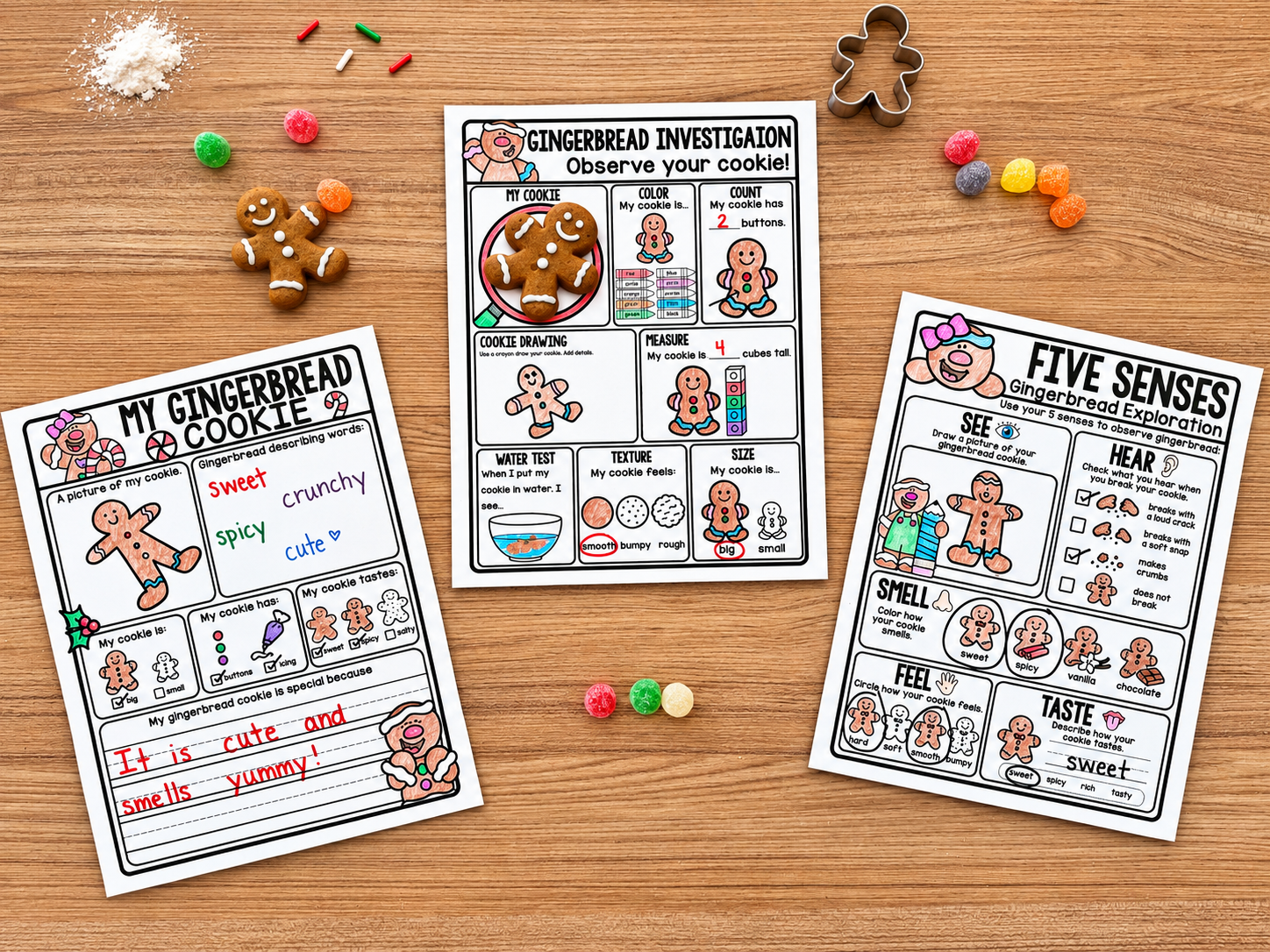
These gingerbread science activities bring observation, five senses, measurement, and descriptive writing together. Children look closely, explain what they notice, and use their observations in their writing. That gives your gingerbread theme a purposeful science connection without a complicated setup.
Start with a cookie and a closer look
Gather gingerbread cookies, linking cubes, crayons or pencils, and one clear bowl of water for the class demonstration. Before you begin, check ingredient labels, student allergies, and your school’s food policy. Tasting is optional.
Give students time to study a dry cookie before anyone takes a bite. Ask: What color is it? How does its surface look? How many buttons can you find? Is every cookie exactly the same?
A cookie without icing is useful, too. Zero buttons is still an observation! Encourage students to draw what they actually see rather than what they think a gingerbread man is supposed to look like.
Next, measure the cookie’s height with linking cubes. Model lining up the cubes from the bottom to the top without gaps. Children can compare their measurements and talk about why cookies might not all be the same size.
Use ONE class cookie for the water investigation
Keep each child’s cookie dry and separate. Place one extra cookie in the bowl of water for everyone to observe. Students make a prediction, watch for changes, and describe what happens.
Try these questions: • What do you think will change first? • Does the cookie still look the same? • What evidence can you see in the water? • How is the wet cookie different from the dry cookie?
Use words such as soft, soggy, crumbly, and breaking apart when they match what students observe.
A cookie getting soggy is not the same process as ice melting. The timing and changes can vary with the cookie you use, which makes testing your materials beforehand helpful.
The water-test cookie is for investigating, not eating. If tasting is part of your lesson, children can enjoy their own clean, dry cookie afterward. One soggy class cookie is plenty!
Bring in the five senses
Invite children to describe the cookie’s appearance, texture, smell, and any sounds they can safely observe. If tasting is permitted, encourage specific words instead of stopping at “good.” Is it sweet?
Spicy? Do students notice different flavors?
For a no-taste option, focus on the observations children can make safely and discuss why we do not taste everything scientists investigate. A photograph can support visual observations when handling food is not appropriate.
Stauffer’s Iced Gingerbread Cookies are one ready-made option to consider. Check the current package rather than assuming any brand is suitable for every child. The observations should follow the cookie you actually provide.
Turn observations into writing
After the investigation, revisit the words students used. Build a quick class word bank together, then invite children to draw their cookie and add details to a description.
Emerging writers can tell a partner their sentence, label a drawing, or dictate an observation. Students ready for more can compare two features or explain how the cookie changed in water. The shared experience gives everyone something concrete to write about.
The printable support is ready for you
My Gingerbread Investigations resource includes the cookie investigation, five-senses activity, and descriptive writing page, along with teacher guidance and lesson plans. Standards, questions, and differentiation ideas help you connect the cute cookie to the skills you are teaching.
Choose one investigation for a science lesson, or spread the experiences across your gingerbread week. You do not have to fit every page into one sitting.
See the Gingerbread Investigations resource on TPT and choose the activities that fit your class.