

Gingerbread Man Sequencing and Retelling Activities with a Cookie Sheet Craft
This post contains affiliate links. As an Amazon Associate I earn from qualifying purchases.
The gingerbread man is running, everyone is chasing, and your students have plenty to say about it.
Let’s give those story ideas somewhere to go!
A printable reader, story cookies, and a cookie-sheet mat make a hands-on way to practice Gingerbread Man sequencing and retelling. Children move the story events into order, talk through what happened, and then use that oral rehearsal to support their writing.
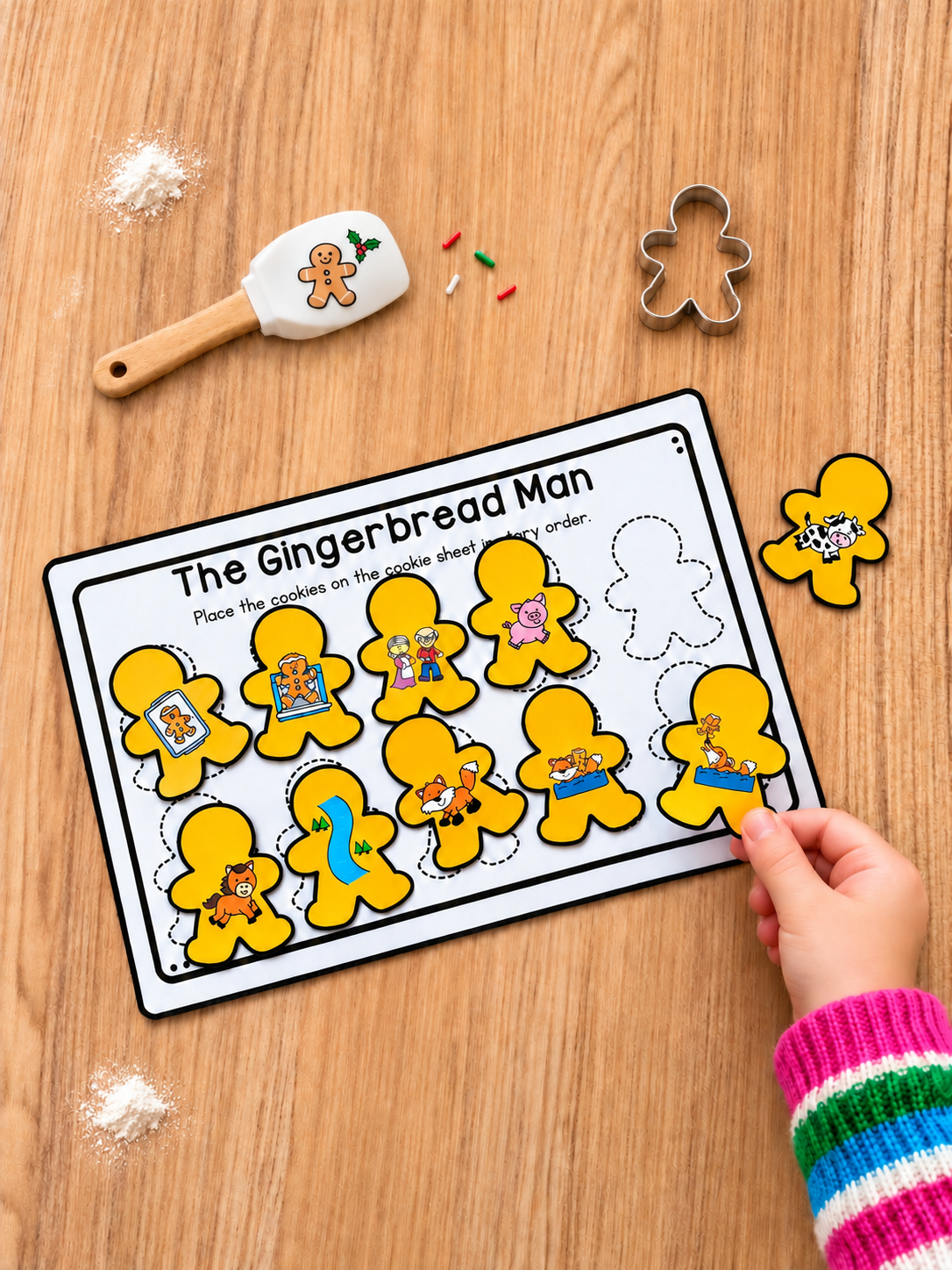
Read first then talk through the story
Begin with the printable reader and invite students to notice the characters and important events. Read together, pause for predictions, and revisit pages when children need help remembering what happened.
Ask questions that send students back to the story: • Who is in this part? • What happened before that? • What changed next? • How did the story end?
You can also share a separate read-aloud, such as The Gingerbread Man retold by Karen Schmidt.
Make clear which version students are sequencing. Gingerbread stories can have different characters and endings, so two versions do not always match picture for picture.
Put the story cookies in order
Introduce the illustrated story pieces before handing over the glue. Students identify each scene, place the cookies on the cookie-sheet mat, and retell the story in sequence.
Model one decision aloud: “I remember this happened after ___. I’m going to check that page.” Then let children explain their choices. If a piece is out of place, reread the relevant part together rather than simply moving it for them.
This step gives you a helpful look at comprehension. A child may recognize the pictures but still need support connecting one event to the next.
Use it as a center OR a craft
For a reusable retelling center, prepare the mat and story pieces for repeated handling and keep each set together. Children can arrange, retell, check the reader, and reset for the next partner. Lamination is an optional preparation choice, not a requirement for the activity.
For the craft version, students arrange their pieces first and attach them once they have checked the sequence. Choose the color version or the black-and-white version to suit your printing and coloring plans.
Either way, this is a paper-cookie activity. No baking, icing, or emergency trip for twenty extra cookies required.
Let the pictures support writing
After students retell with the pieces, move to the writing page. Saying a sentence before writing it helps children keep their idea in mind.
Use first, next, then, and last as language supports. A beginning writer might draw and label one important event. Another child might write several connected sentences. A student ready for a challenge can explain why the ending happened or compare it with another gingerbread story.
The K–2 writing-line choices let you select a format that suits your learners without changing the shared story experience.
Keep the focus on comprehension
Students are doing more than putting pictures in a row. They are identifying events, checking sequence, using story vocabulary, and communicating meaning to a listener or reader. Ask partners to listen for a missing event or a detail they want to know more about.
For a child who needs support, begin with fewer pieces and add the remaining events as confidence grows. For students ready for independence, have them explain how they know their order matches the reader.
Ready for your gingerbread literacy plans
The Gingerbread Man Book, Craft, and Writing resource includes the printable reader, cookie-sheet sequencing activity, color and black-and-white choices, and retelling writing pages. Teacher directions and lesson planning support help you use it as a literacy center, a guided lesson, or a finished craft.
Take a closer look at the Gingerbread Man Sequencing and Retelling resource on TPT and choose the version that works for your classroom.