
All About Turkeys Activities with a Sweet Little Writing Craft
There is something extra sweet about a turkey craft with a little learning tucked under every flap. The colorful feathers catch your eye, and the writing gives your little learners something to share.
If you are planning your November lessons, these All About Turkeys activities bring science, reading, and writing together around one very cute bird. The turkey flipbook is a lovely way for first and second graders to organize what they learn, with plenty of room for kindergarten support, too.
Here is a simple way to use the All About Turkeys science and literacy unit without squeezing every activity into one busy afternoon.
Begin with a little turkey curiosity
Before you bring out the craft pieces, show a real turkey photograph or read a short nonfiction text together. Ask, “What do you notice?” and “What would you like to find out?” Give children a moment to talk with a partner before sharing.
Keep their questions nearby as you learn. Then make a simple class chart with three headings that match the flipbook: Turkeys Are, Turkeys Have, and Turkeys Can. Add facts from your reading and talk about which heading fits each idea.
A small science tip: if flying comes up, be specific. Wild turkeys can fly, especially over short distances, but heavy, broad-breasted domestic turkeys generally cannot. “Wild turkeys can fly” is more accurate than “All turkeys can fly.” The Florida Fish and Wildlife Conservation Commission and South Carolina Department of Natural Resources explain the distinction.
Turn turkey facts into a sweet little flipbook
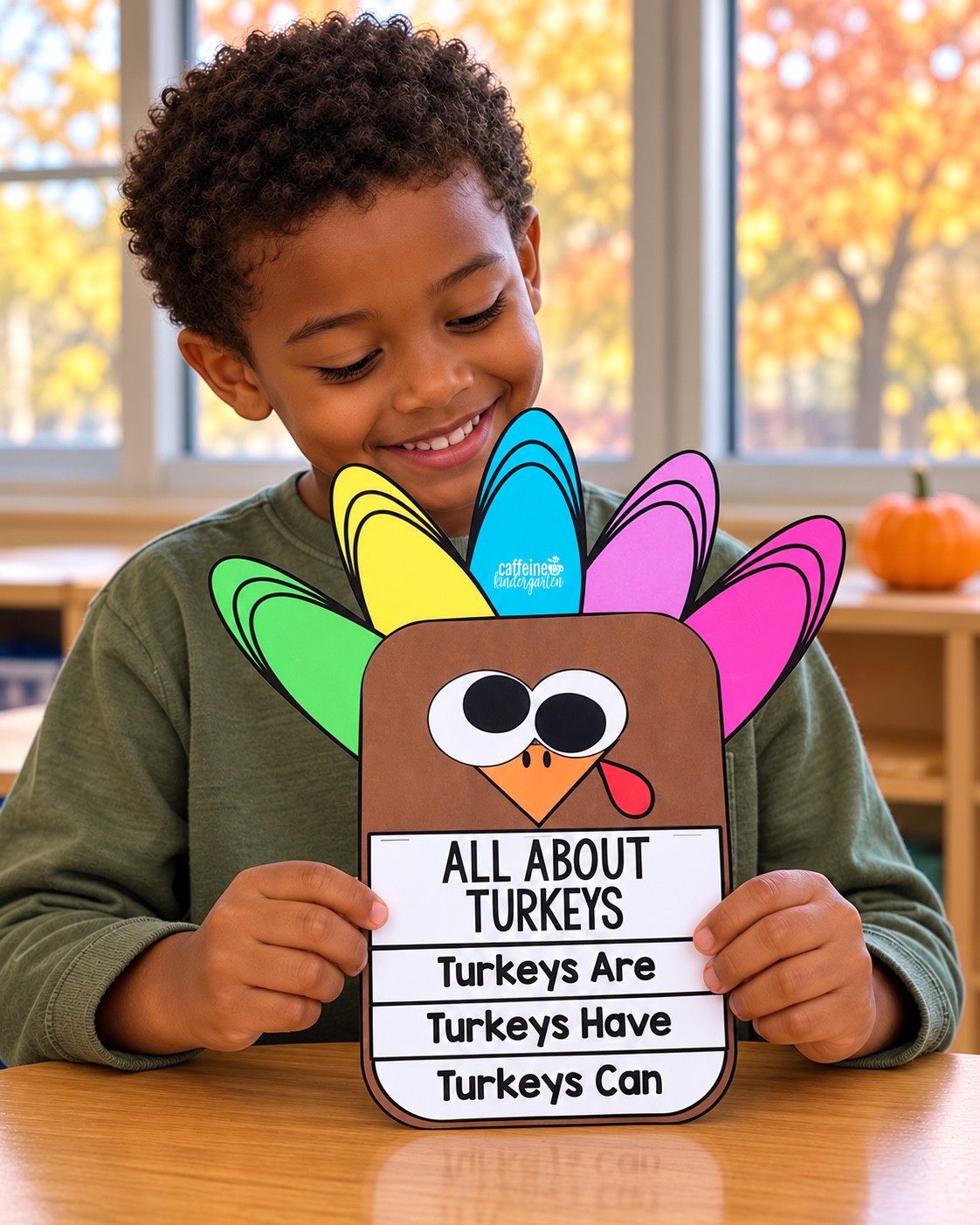
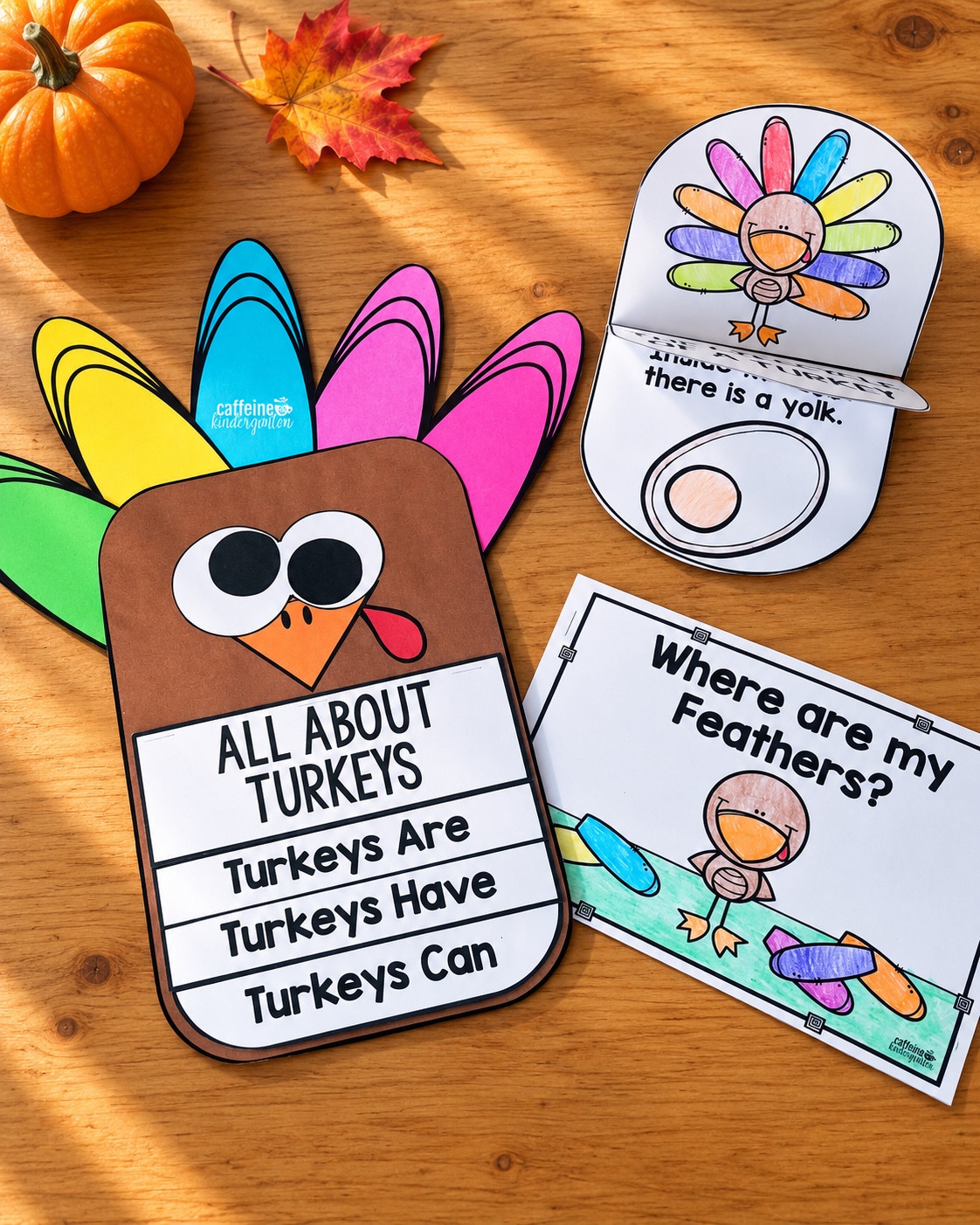
The writing craft has an All About Turkeys cover and three flaps: Turkeys Are, Turkeys Have, and Turkeys Can. Those headings give children a clear place to begin instead of facing a blank page.
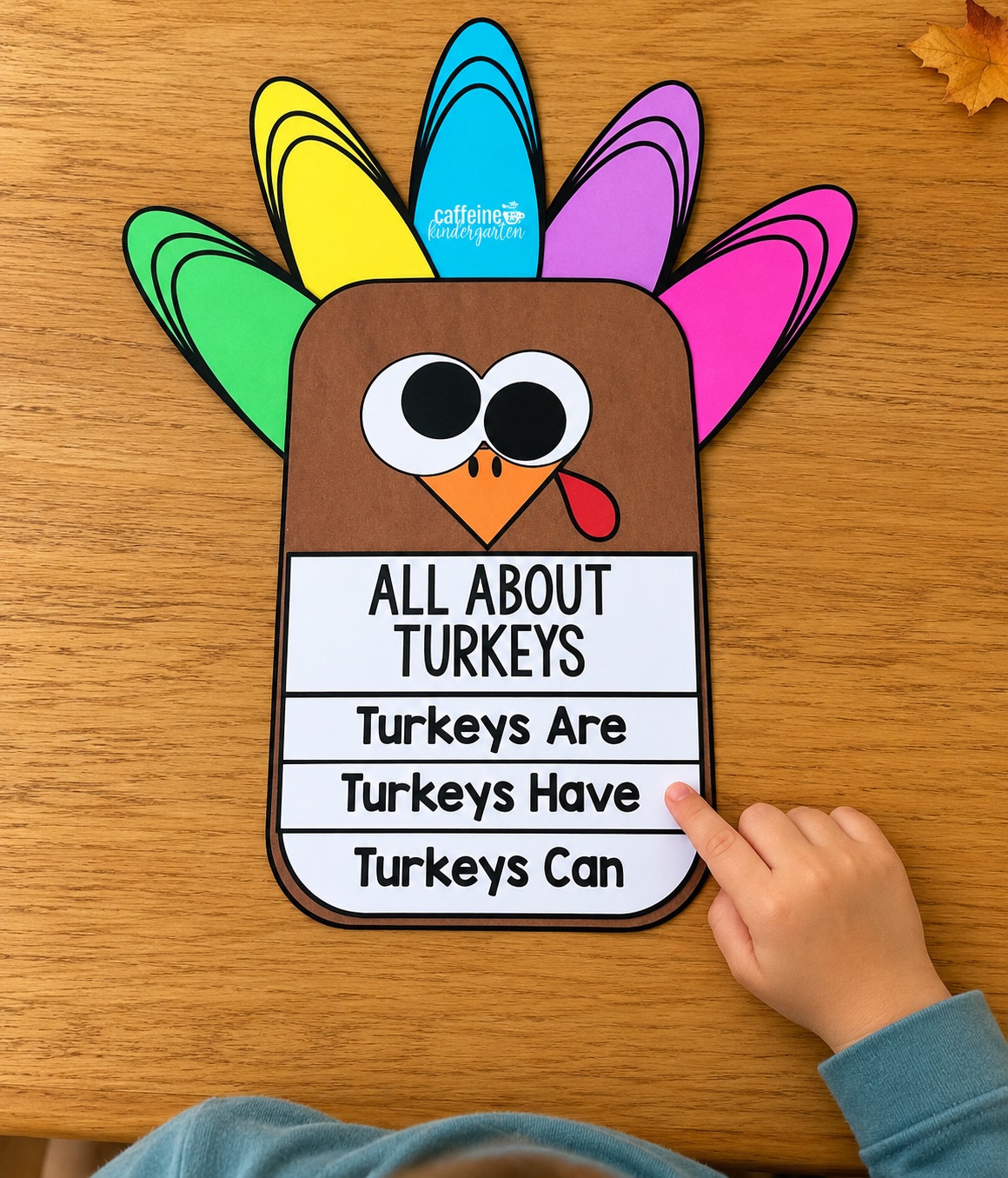
Gather the craft and writing pages, pencils, coloring supplies, scissors, and glue. Having a finished example nearby makes it easier to show how the pieces fit together.
- Say it before writing it. Invite each child to choose a fact from your class chart and say a complete sentence to a partner. Listen for whether the sentence matches its flap.
- Write while the pages are flat. Have students record their sentences before assembling the turkey. Pause for a quick reread: Does the sentence make sense? Does it begin with a capital and end with punctuation?
- Make the turkey. Cut and assemble the pieces, keeping the writing flaps free to open. Let children make their feather colors their own. A whole flock of slightly different turkeys is part of the charm!
- Share the learning. Partners can lift each flap and read their facts aloud. Invite them to tell each other one thing they learned about turkeys.
Make the writing fit your little learners
For first graders, a shared word bank and oral practice can support one complete sentence under each flap. Second graders who are ready can add a specific detail or explain a fact further, using separate writing paper if they need more space.
Kindergarten writers can draw, label, or dictate an idea while you model the sentence. You might complete one flap at a time with a small group. Everyone can work toward the same goal: sharing something true about turkeys in a way another person can understand.
There is no need for every turkey to have identical writing. The finished craft is a chance to see what each child understands, not how closely everyone copied your example.
Keep turkey week going with reading and science
The unit also includes two emergent readers, a pocket chart center, and a turkey life cycle flipbook. Choose the pieces that fit your class rather than feeling you need to use everything at once.
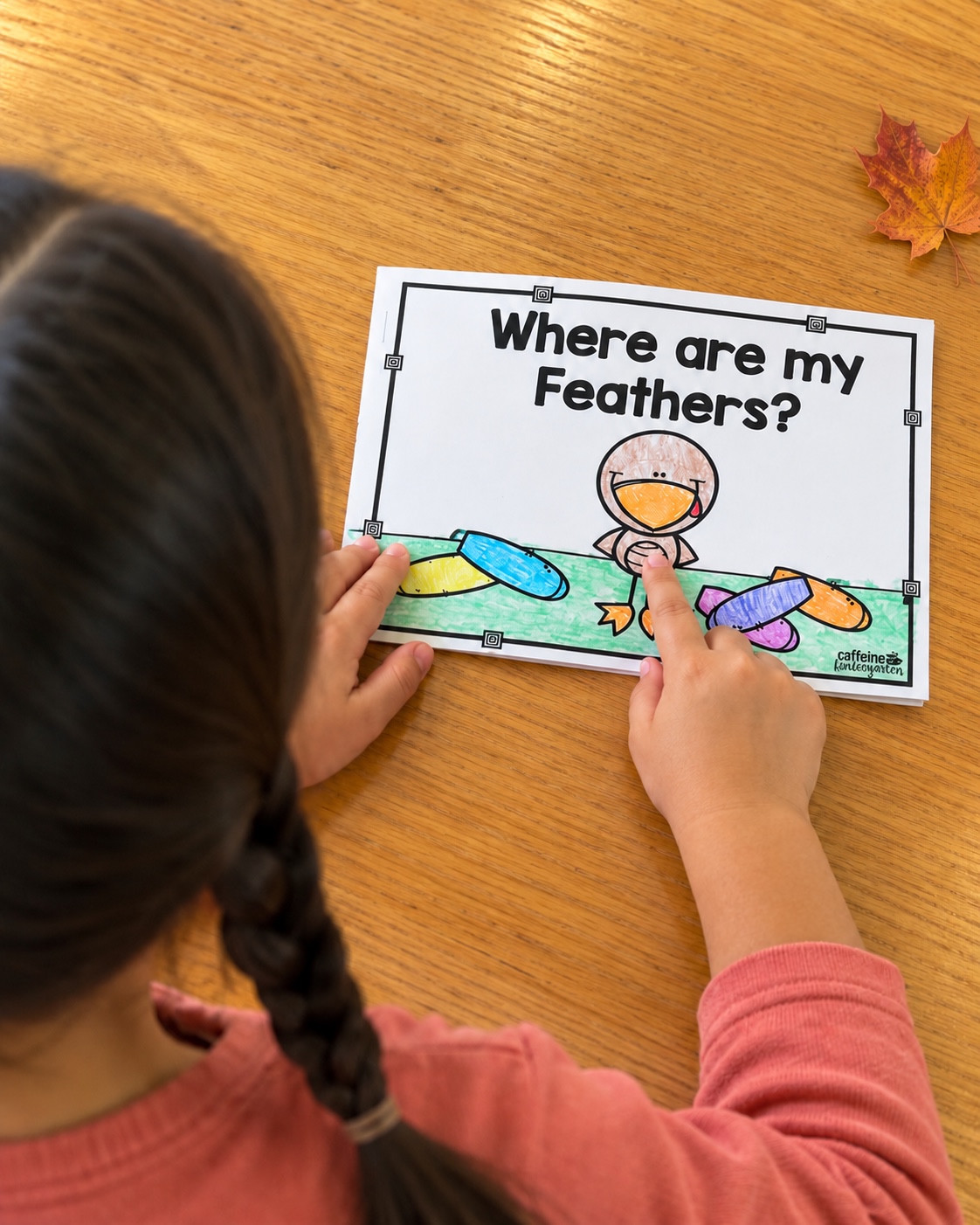
The Where are my Feathers? reader shown here is a cheerful addition to your turkey theme. Read the title together, talk about the cover, and share the book with a small group. Children who are ready can revisit it with a partner after reading it with you.
On another day, use the life cycle flipbook to revisit how a turkey grows. Ask children to explain what is happening as they turn the pages. Their explanations can help you decide what to review next.
Make room for a proud little turkey display
Display the finished writing crafts where students can open the flaps, or send them home with an invitation to read their facts to someone. Those bright feathers make a cheerful November display, and the writing underneath gives children a reason to say, “Look what I learned!”
Ready to plan a little turkey learning? Find the All About Turkeys unit here and choose the reading, science, and writing activities that work for your class.