
8 Thanksgiving Read-Alouds for the Classroom
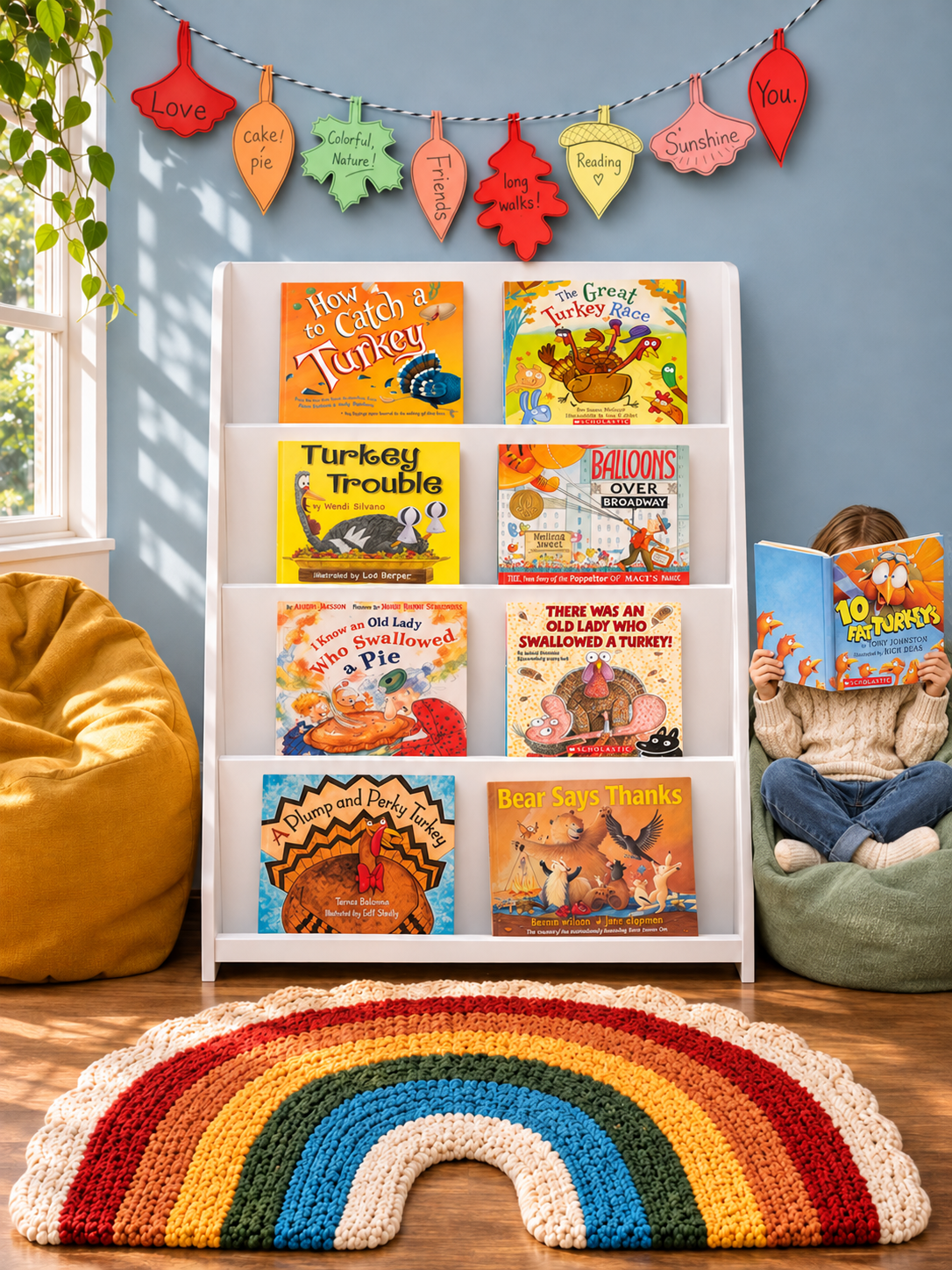
November read-alouds have an important job: they need to keep our little learners engaged, get them talking and thinking, and somehow compete with the excitement of Thanksgiving break. And maybe pie.
These eight Thanksgiving read-alouds bring laughter, meaningful conversations, and reading comprehension practice to the classroom. Some are silly turkey adventures, while others invite students to think about friendship, gratitude, creativity, and problem-solving. Pick a book, choose one question, and keep the follow-up simple!
As an Amazon Associate I earn from qualifying purchases. This post contains affiliate links, which means I may earn a commission if you purchase through them, at no extra cost to you.
1. How to Catch a Turkey
Adam Wallace; illustrated by Andy Elkerton
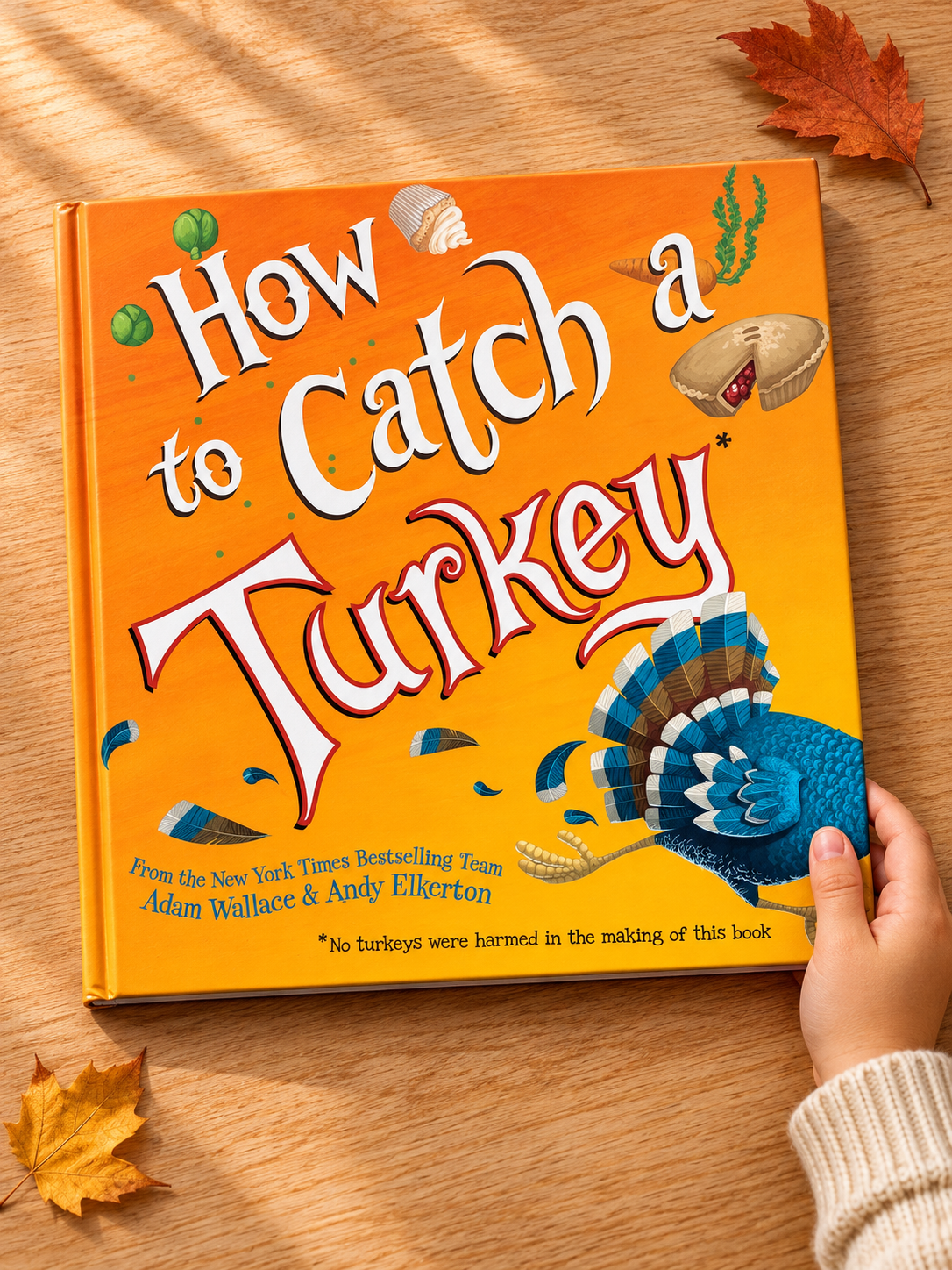
A turkey is loose just before the school Thanksgiving play, and catching him is going to take some creative thinking! The fast-paced action and colorful illustrations give students plenty to notice as they predict what might happen next.
- Practice: Sequencing, predicting, and using picture clues.
- Character connection: Resourcefulness and teamwork. Ask: “What do the students do when a plan doesn’t work?”
- Try it: Invite students to draw and label a pretend, turkey-safe trap. Hello, November STEM!
Find How to Catch a Turkey on Amazon
2. The Great Turkey Race
Steve Metzger; illustrated by Jim Paillot
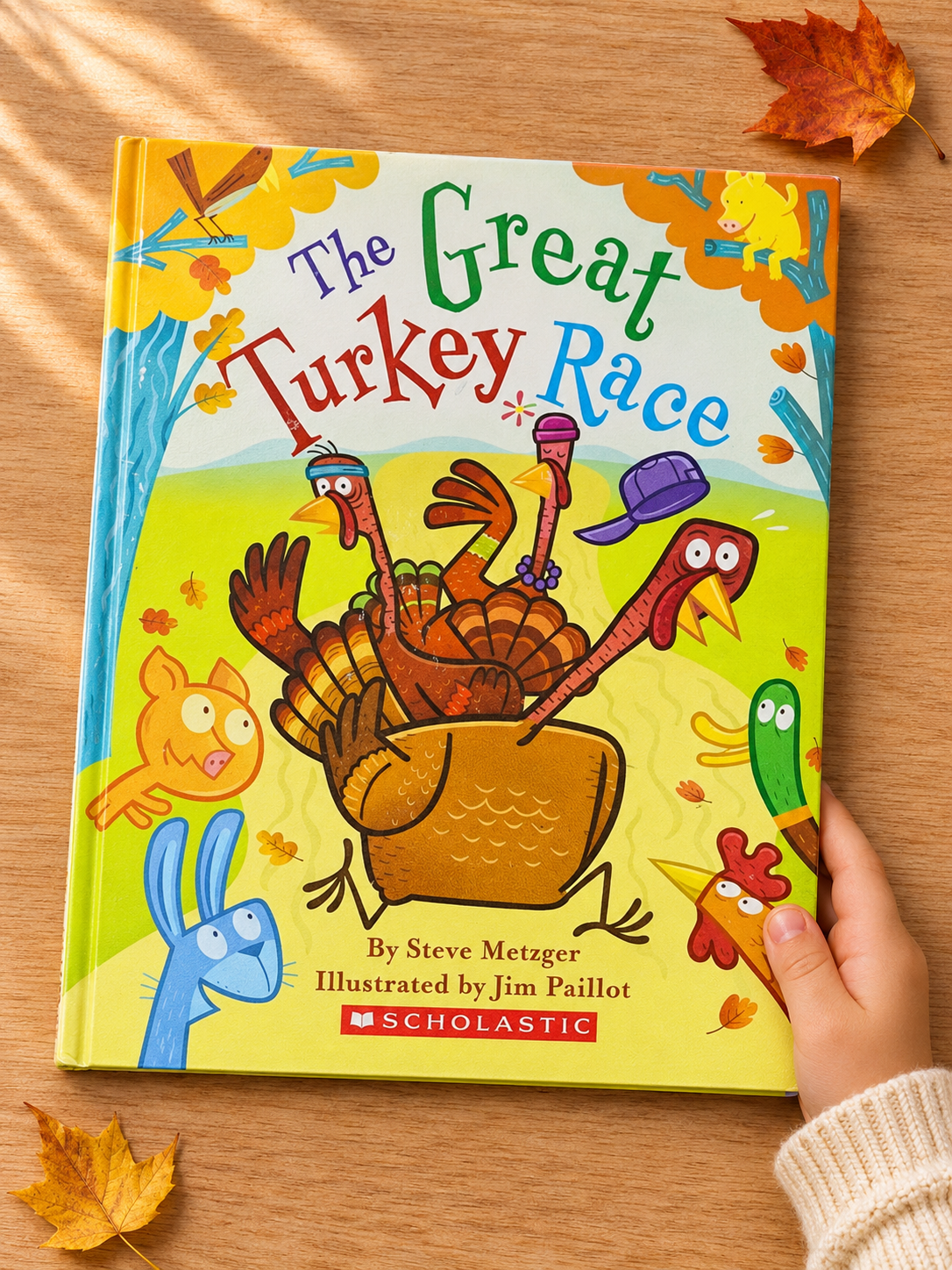
Cassie, Wing, and Ollie are determined to win a competition to become Farmer Joe’s Thanksgiving turkey. But when they discover what winning really means, their plans change in a hurry! The surprise is a great opportunity to talk about how new information can change a character’s goal.
- Practice: Character motivation, sequencing, and identifying how a problem changes.
- Character connection: Competition and cooperation. Ask: “How do the turkeys’ goals change when they learn more?”
- Try it: Complete three quick statements: “At first they wanted… Then they learned… Now they want…”
Find The Great Turkey Race on Amazon
3. Turkey Trouble
Wendi Silvano; illustrated by Lee Harper
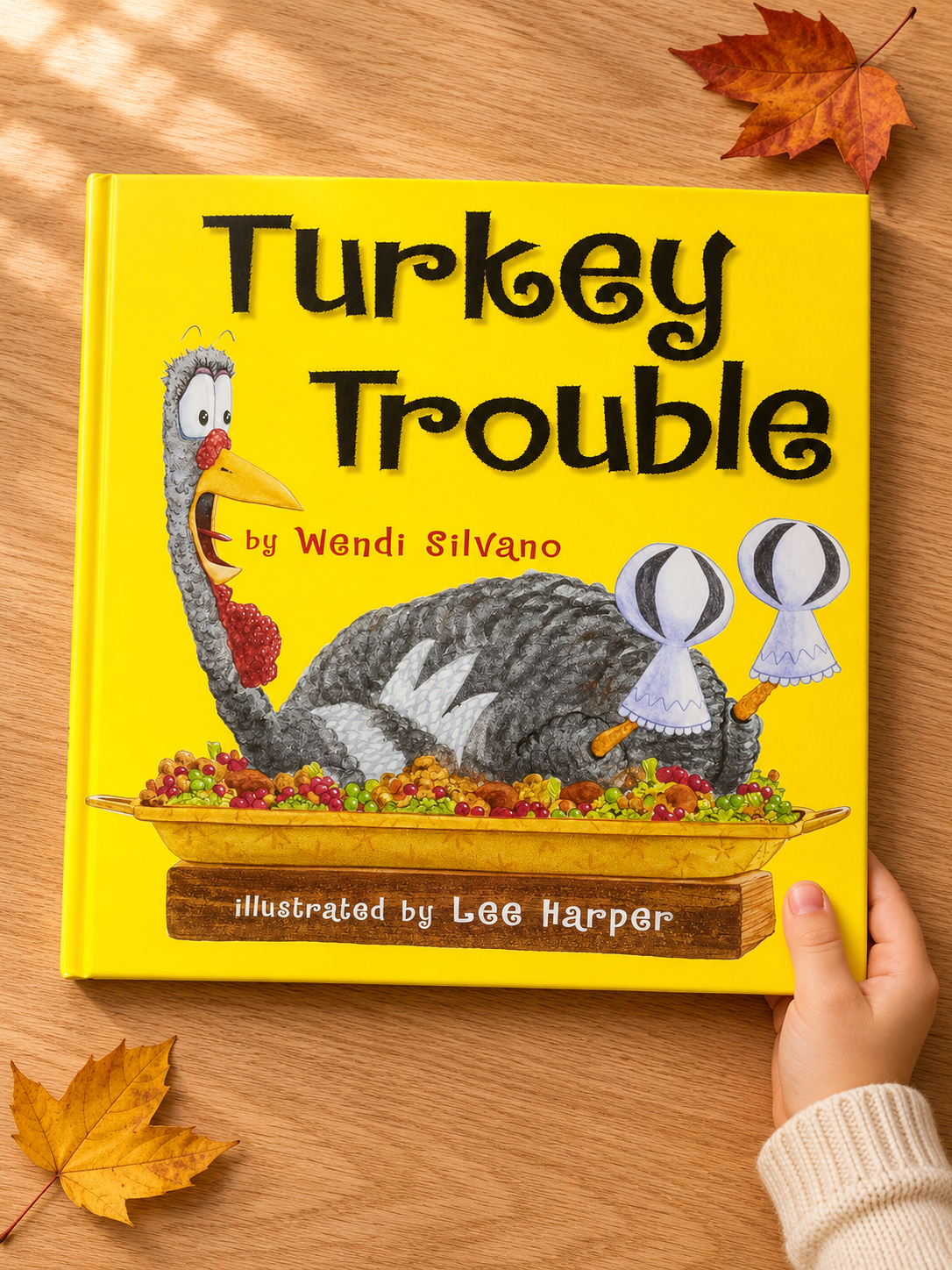
Turkey has a problem, and he is willing to try a LOT of disguises to solve it. The visual jokes make this one especially fun to revisit because students can look closely at each costume and spot clues that Turkey is still… well, Turkey!
- Practice: Problem and solution, cause and effect, and retelling.
- Character connection: Persistence and flexible thinking. Ask: “What does Turkey do after an idea doesn’t work?”
- Try it: Design a new disguise for Turkey and explain why it might work.
4. Balloons Over Broadway
Written and illustrated by Melissa Sweet
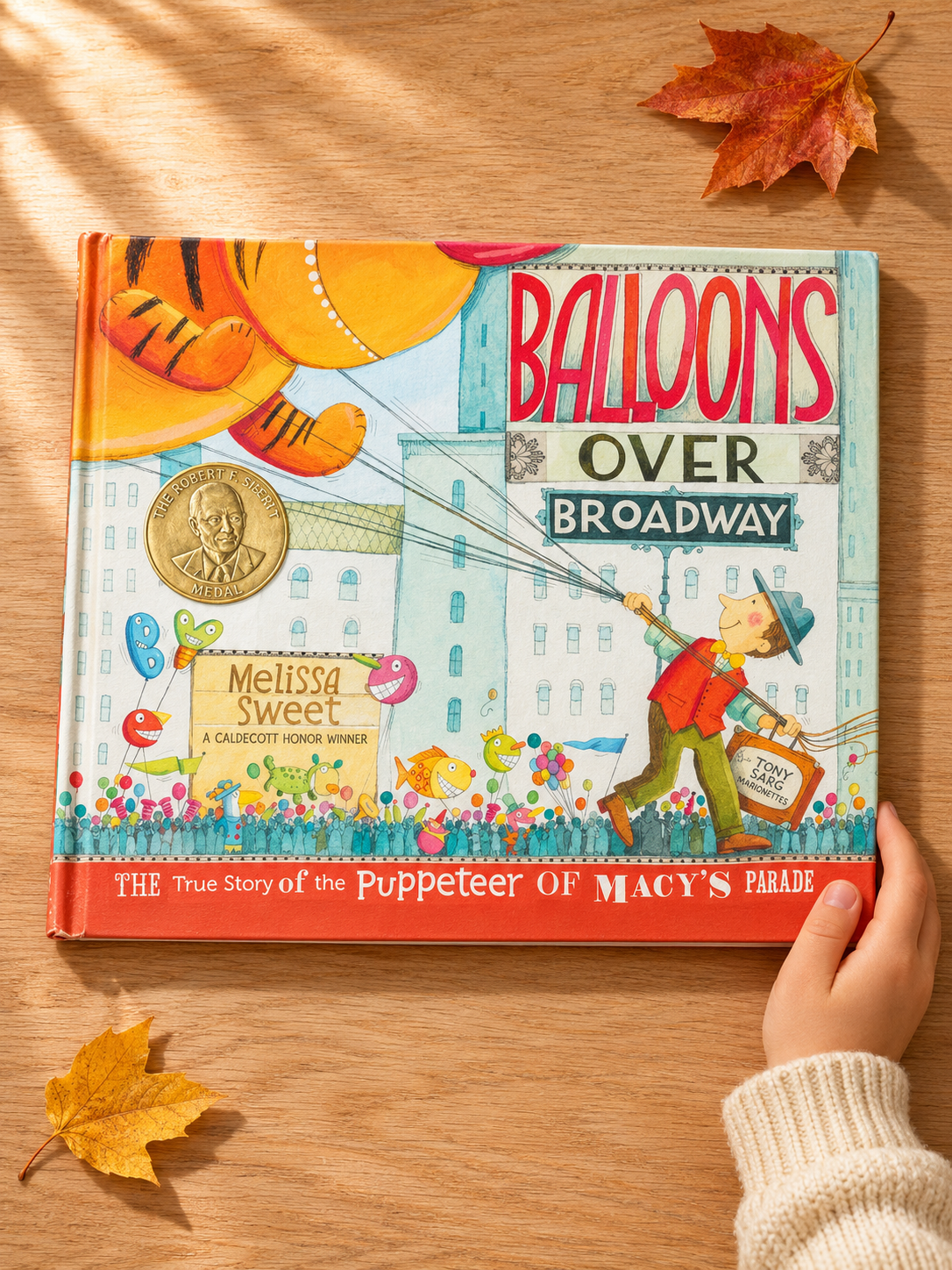
This true story introduces students to puppeteer Tony Sarg and the creative ideas behind the giant balloons in the Macy’s parade. It’s a wonderful way to bring nonfiction, engineering, art, and a little parade-day magic together!
- Practice: Identifying facts, explaining a sequence, and connecting a problem with a solution.
- Character connection: Curiosity and creativity. Ask: “What does Tony do that shows he is a problem solver?”
- Try it: Have students draw a parade puppet and label how they would make it move.
Find Balloons Over Broadway on Amazon
5. I Know an Old Lady Who Swallowed a Pie
Alison Jackson; illustrated by Judy Schachner
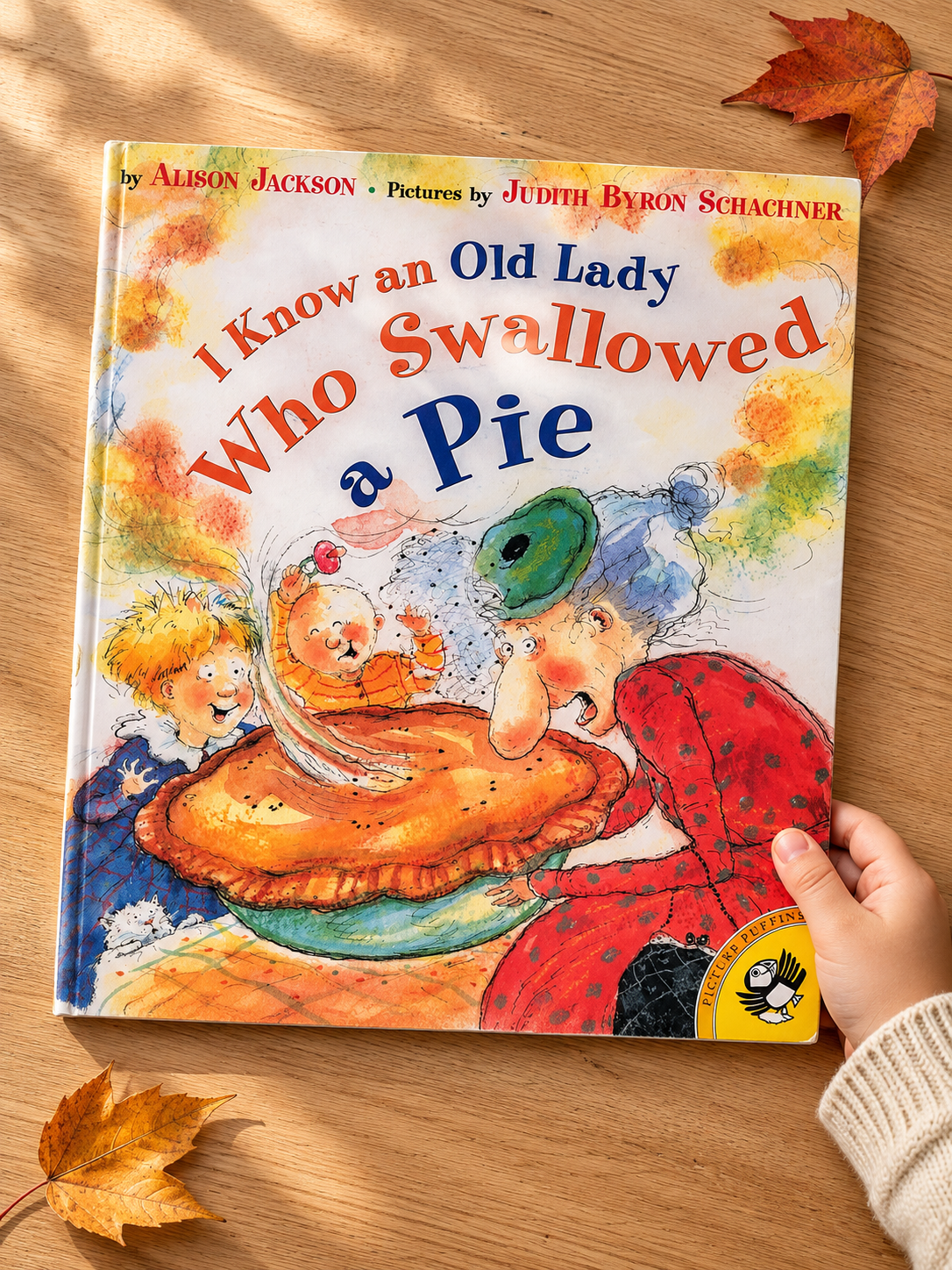
If your students enjoy a story that gets sillier with every page, this cumulative Thanksgiving rhyme is a fun one to add to your stack. The growing list of foods invites children to join in, remember what came before, and predict what could possibly happen next.
- Practice: Sequencing, retelling, rhyme, and recognizing exaggeration.
- Character connection: Notice how the other characters react. Ask: “What do their faces tell you?”
- Try it: Put food picture cards in order and use them to retell the story together.
Find I Know an Old Lady Who Swallowed a Pie on Amazon
6. There Was an Old Lady Who Swallowed a Turkey!
Lucille Colandro; illustrated by Jared Lee
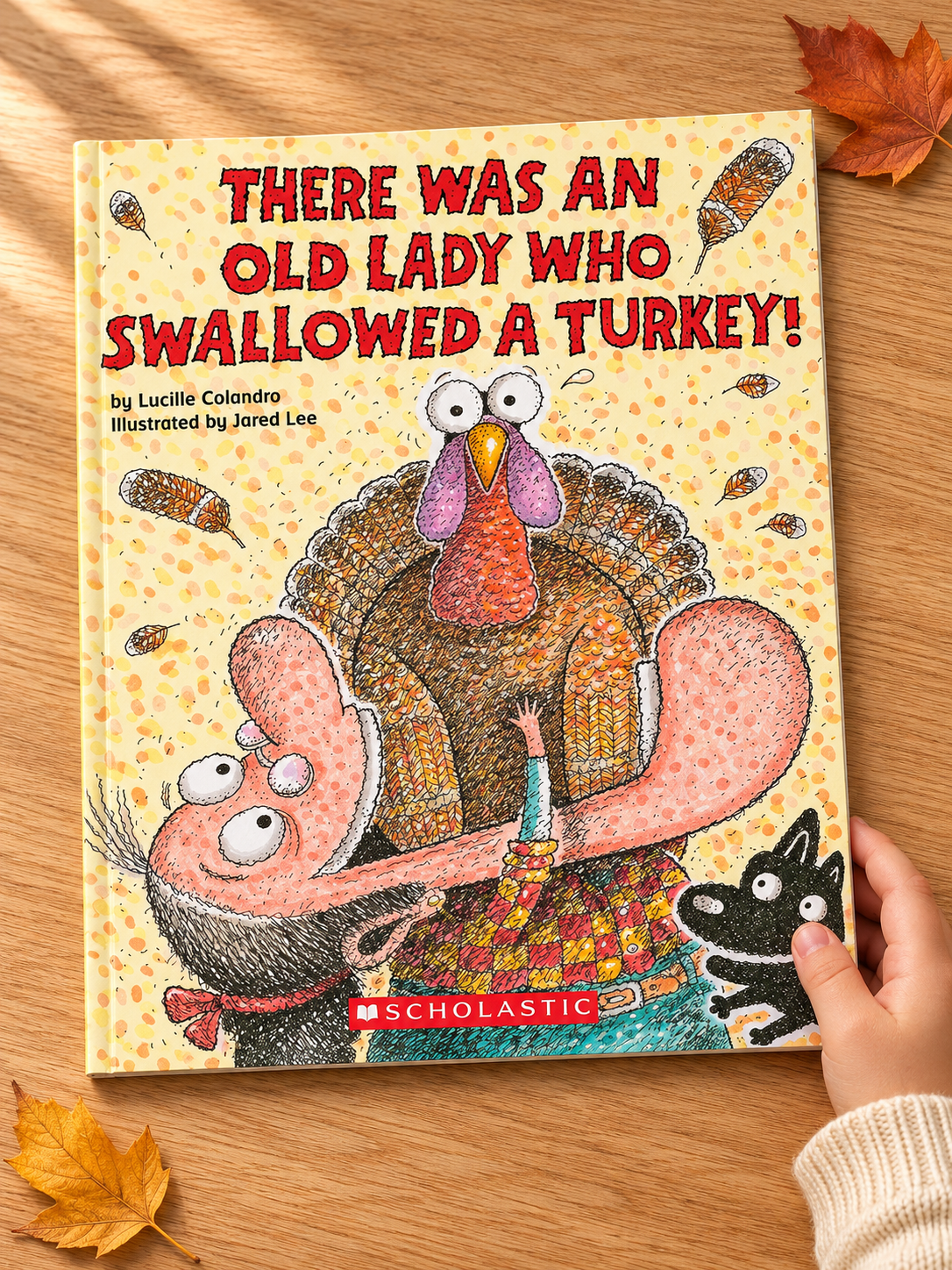
A turkey, a balloon, a boat… what could the old lady possibly be planning? The increasingly unexpected objects give students a reason to make predictions and then change their minds as new clues appear.
- Practice: Sequencing, recalling details, and revising predictions.
- Character connection: Explore a character’s actions and possible motives. Ask: “Why do you think she is collecting these things?”
- Try it: Pause before the ending and have students draw their predictions. Compare ideas after you finish reading!
Find There Was an Old Lady Who Swallowed a Turkey! on Amazon
7. A Plump and Perky Turkey
Teresa Bateman; illustrated by Jeff Shelly
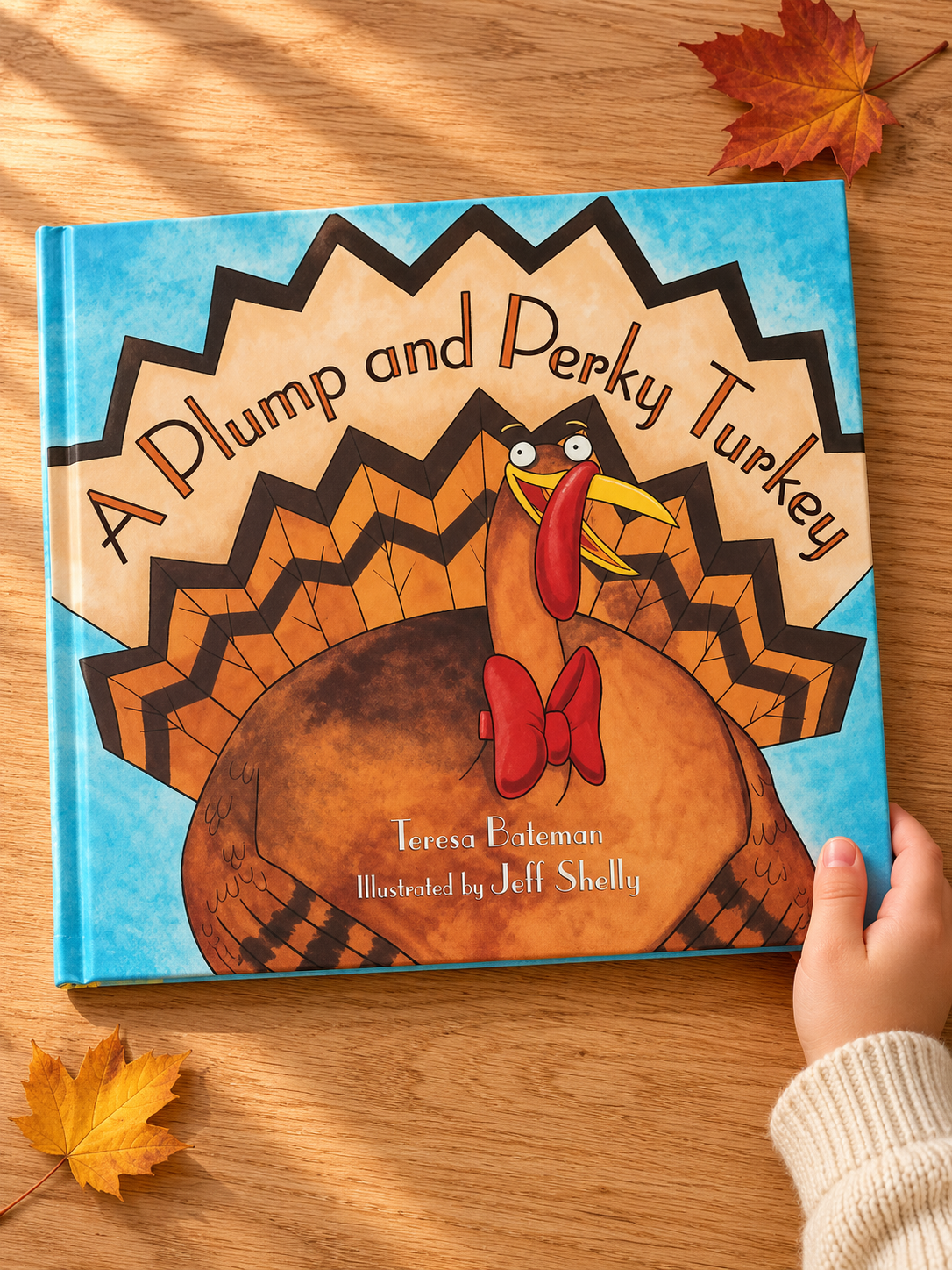
The townspeople of Squawk Valley come up with a plan to lure a turkey to their turkey-themed art event. But Pete the turkey has ideas of his own! Students can examine both sides of the plan and look closely at how Pete uses the artwork to help himself escape.
- Practice: Inferring, character motivation, and using illustrations as evidence.
- Character connection: Clever problem-solving. Ask: “What do the townspeople want? What does Pete want?”
- Try it: Create a paper turkey that blends into a patterned background, then explain how it connects to Pete’s solution.
Find A Plump and Perky Turkey on Amazon
8. Bear Says Thanks
Karma Wilson; illustrated by Jane Chapman
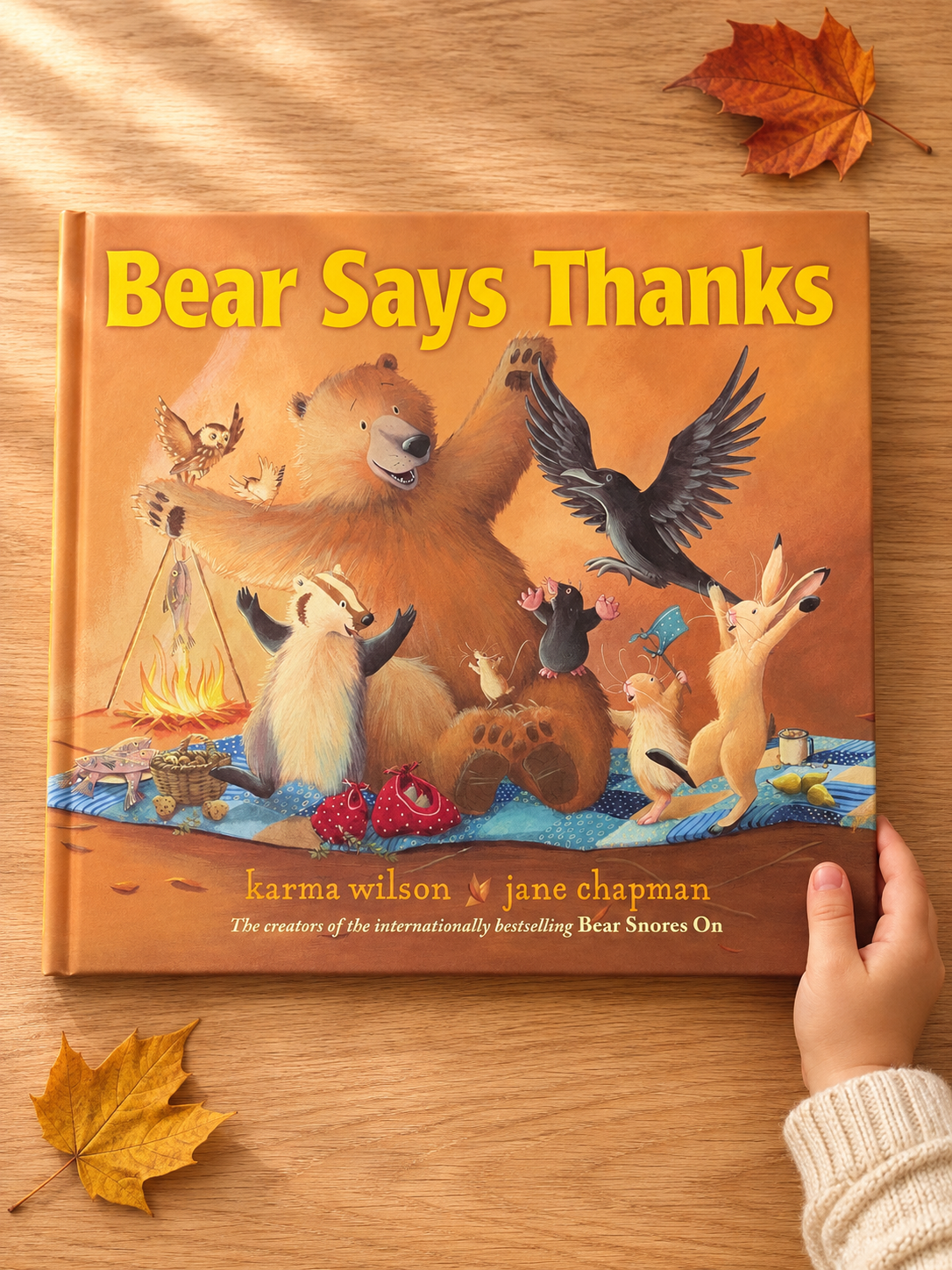
Bear wants to share a feast with his friends, but his cupboards are bare. As his friends arrive with food, the story opens a lovely conversation about generosity, friendship, and the different things each person can contribute. The warm illustrations and gentle story make this a sweet choice when you’re ready to slow things down after all that turkey trouble.
- Practice: Inferring feelings and identifying a problem and its response.
- Character connection: Gratitude and inclusion. Ask: “How do Bear’s friends help him feel included?”
- Try it: Finish the sentence “A friend can contribute _____” with a drawing, dictated response, or written sentence. Contributions don’t have to be something purchased.
Find Bear Says Thanks on Amazon
Make your November read-alouds work a little harder
You don’t need a separate activity for every book. Pick one question, give students time to turn and talk, and invite them to point to a picture or detail that supports their thinking. A quick drawing, retelling, or labeled design can be a meaningful extension without adding a mountain of prep to your day.
Try reading two of the turkey stories and comparing the characters’ solutions. Or pair a silly turkey adventure with Bear Says Thanks for a quieter conversation about friendship and gratitude.
Whether you’re talking about a character’s choices, predicting the next silly surprise, or designing a turkey trap, these stories offer so many ways to read, talk, think, and create together.
What are your favorite books to read aloud in November? I’d love to hear what’s on your classroom bookshelf!