
Shape Turkey Craft for Thanksgiving Math
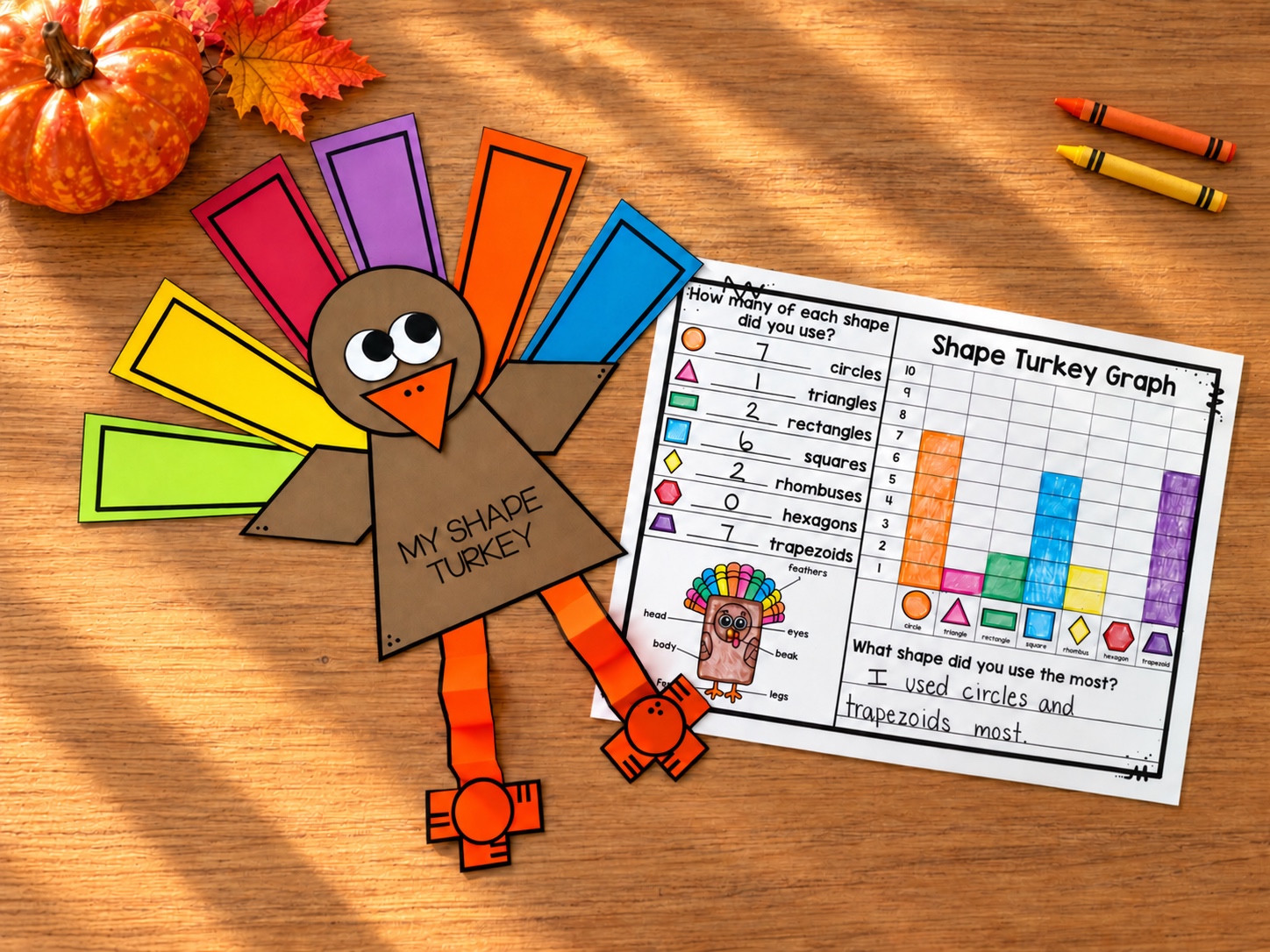
A turkey with colorful shape feathers and little folded legs makes a pretty cute addition to November math! This Shape Turkey Thanksgiving Math Craft gives students a chance to build a turkey while practicing shape names, noticing attributes, and counting the pieces they use.
There is room for plenty of math conversation along the way, too. Before those feathers get glued down, students can sort, compare, and explain their choices.
Getting Your Shape Turkeys Ready
The resource includes blackline turkey craft parts, along with writing and graphing paper. You can copy the pieces onto colored paper or use white paper and let students color them. A few shared trays for the different parts can help keep those tiny pieces from wandering around the room.
Before students begin, decide how much cutting you want them to do independently. Precutting some of the smaller pieces can make the activity more manageable for children who need support with scissors.
Have students arrange their turkey before reaching for the glue. They can move feathers, try different combinations, and check that they have the pieces they need. If you’re adding accordion-folded legs like the ones pictured, model a few folds first. Those bouncy little legs give each turkey some personality!
Make Time for Shape Talk
As students choose their pieces, pause for a few quick questions:
- What do you notice about this shape?
- Which pieces have straight sides? Which have curved edges?
- Can you find two shapes that are alike in one way but different in another?
- If you turn this triangle around, is it still a triangle? How do you know?
For students still learning shape names, start with a smaller selection and name the shapes together. For students who are ready for more, ask them to explain using sides and corners rather than color or size.
A yellow triangle is still a triangle when it is printed on blue paper!
Count Record and Graph
The graphing paper gives students another way to look at their turkeys. Instead of stopping after assembly, have them count and organize the shapes they used.
For easier counting, students can sort and count their paper pieces before gluing. Agree on what they are counting: each individual paper piece, rather than any new outline created when pieces overlap. This keeps the math a little less confusing once the turkey is assembled.
After students record their counts, help them transfer the information to a graph. Model how each space represents one shape.
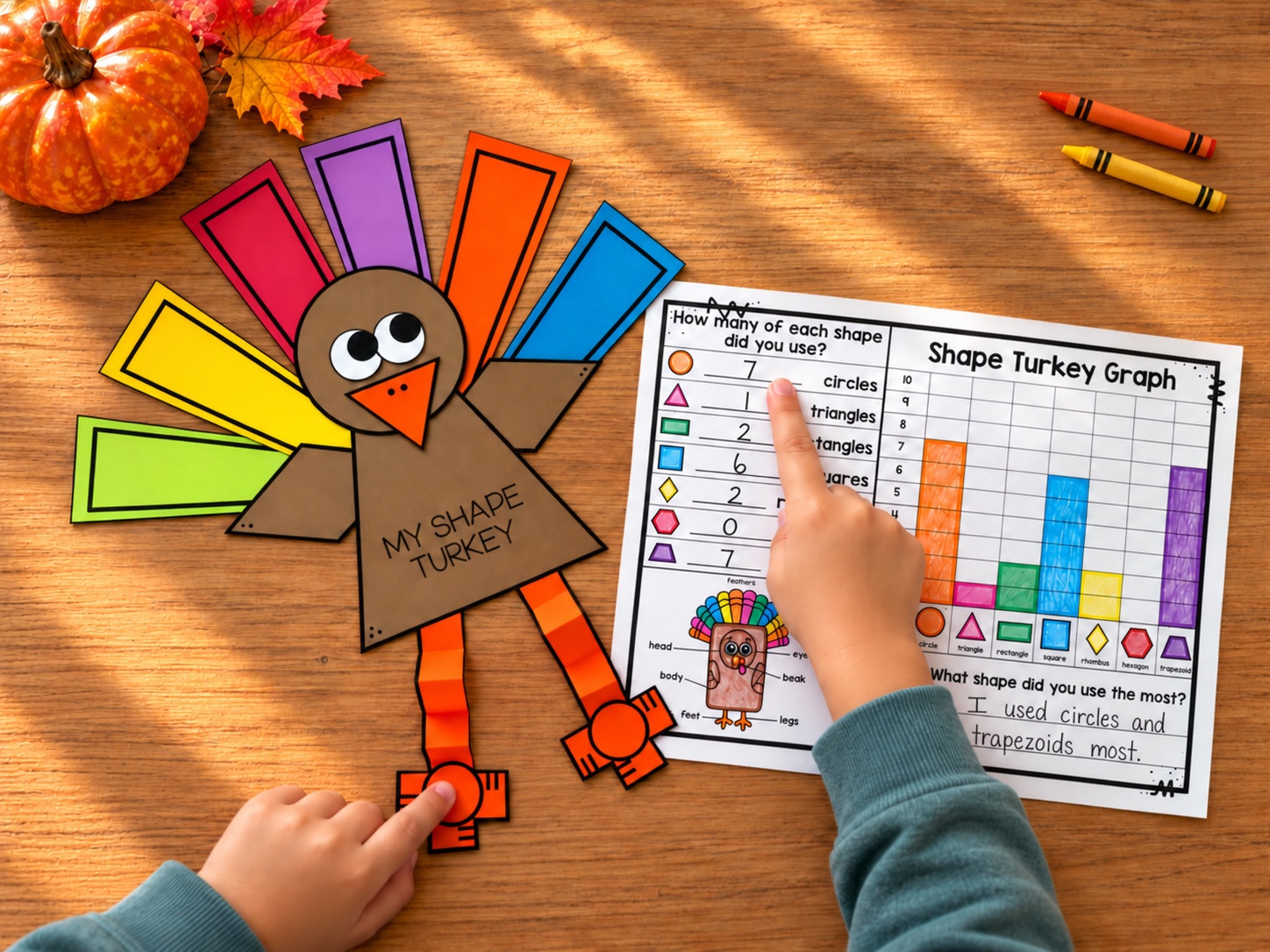
Then ask students to read their own graph:
- Which shape did you use most?
- Did you use the same number of any two shapes?
- How many more of one shape did you use than another?
Partners can check a count together and explain how they know their graph matches their turkey.
Adjust the Math for Your Students
Shape Turkey is listed for PreK–2, so you can choose the amount of math and independence that fits your class.
For younger learners or students who need extra support, offer fewer shape choices, count together, or provide a simple shape-name reference nearby. These are optional supports you can add to the activity. Students can also tell a partner or adult about their turkey before trying to write about it.
For first- and second-grade students who are ready for a challenge, add a comparison or number sentence on separate paper. They might find the total number of pieces in two shape groups or explain the difference between two bars on their graph.
The goal is to give students something worth thinking about without turning every turkey into a long assignment.
Add a Little Writing and Put Them on Display
Use the included writing paper for a short description of each turkey. A teacher-added sentence starter such as “My turkey has…” can help students begin. Students who are ready for more can describe a shape attribute or explain something they learned from their graph.
Display the turkeys beside their writing or graphs so visitors can see the thinking behind the craft. A simple heading like “We’re Thankful for Shapes!” brings the display together without much extra preparation.
You could also take a quick gallery walk and invite students to notice a shape, count a group of feathers, or share something that makes a classmate’s turkey different from their own.
Find the Shape Turkey and the Bundle
You can find the Shape Turkey Thanksgiving Math Craft here.
It’s also included in my 2D Shape Crafts Bundle. If you’d like more shape crafts to use beyond this turkey activity, take a look at the bundle as you plan. It gives you seasonal options for returning to shape recognition and attributes throughout the year.
Whether students are naming their first shapes or explaining the information in a graph, these little turkeys give them something they can build, talk about, and proudly share.