
Class Thankful Turkeys That Help Children Notice Kindness
Ask children why they appreciate a classmate, and you may hear, “She’s nice.” That is a starting point. The useful next question is, “What did she do?”
Maybe she made room at the art table. Maybe she helped gather the blocks after a tower fell. Those small, specific moments give children something meaningful to put on a friendship feather.
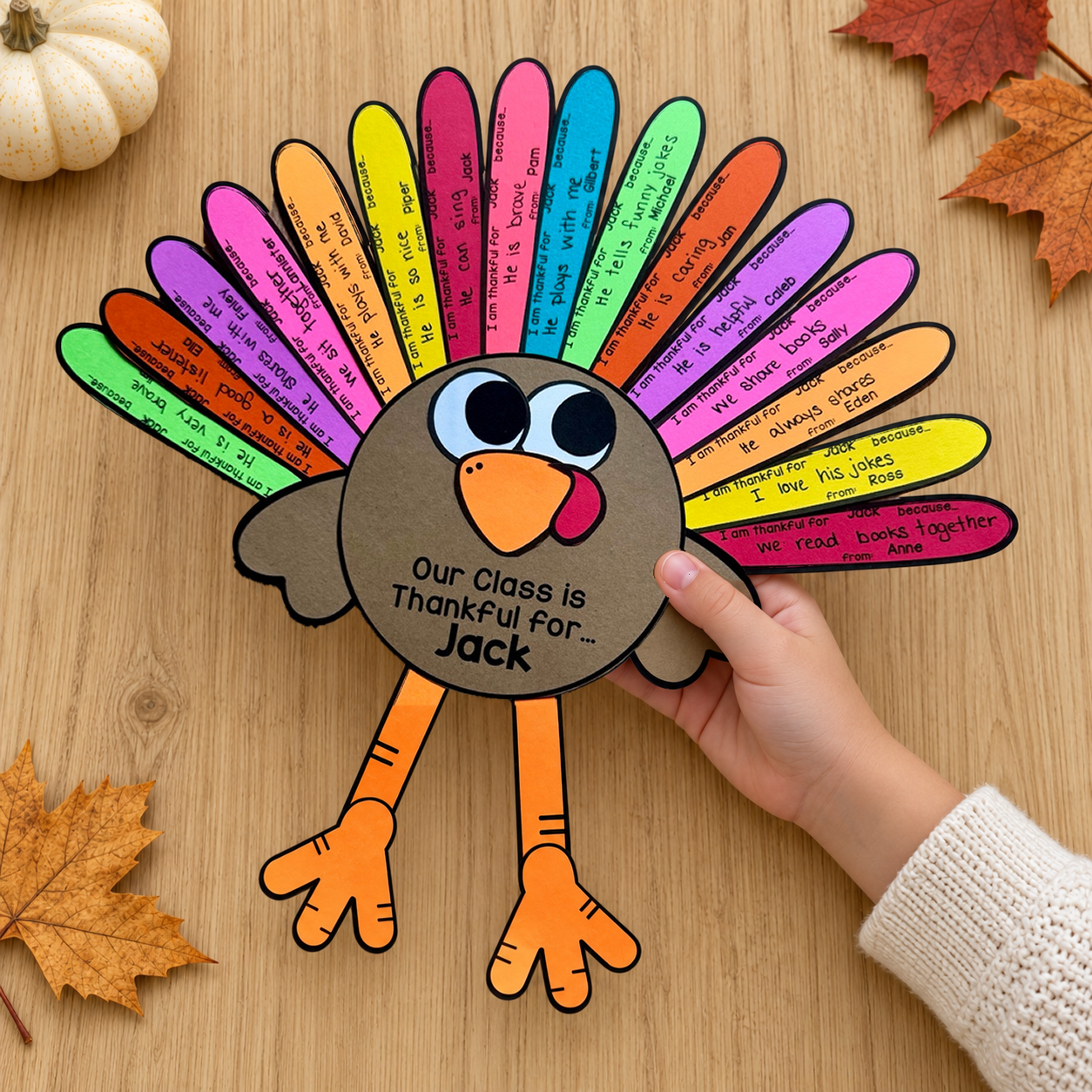
A class thankful turkey activity can make room for that conversation. Each child receives a turkey with messages from classmates. The focus is on noticing one another’s actions, with a plan that includes everyone rather than leaving children to choose only their closest friends.
Begin with actions children can see
Before handing out feathers, model a thank-you connected to something that happened at school. “I noticed you brought the dropped crayons back to our table. Thank you for helping us clean up.”
Ask children to name other helpful actions. Write a short list together: making space, offering materials, explaining a game, returning something, or listening to an idea. Invite examples without asking children to name a “best” or “kindest” classmate.
Then practice making a general comment more specific:
- “You are helpful” becomes “You helped me find the blue marker.”
- “You are a good friend” becomes “You asked me to join your game.”
- “You are nice” becomes “You listened to my idea for our tower.”
These are practice examples, not sentences everyone needs to copy. A child’s own short, true observation is enough.
Set up a manageable feather exchange
You can use construction-paper feathers and a simple paper turkey for this routine. Gather paper, pencils or crayons, scissors, glue, and a class list for your own planning.
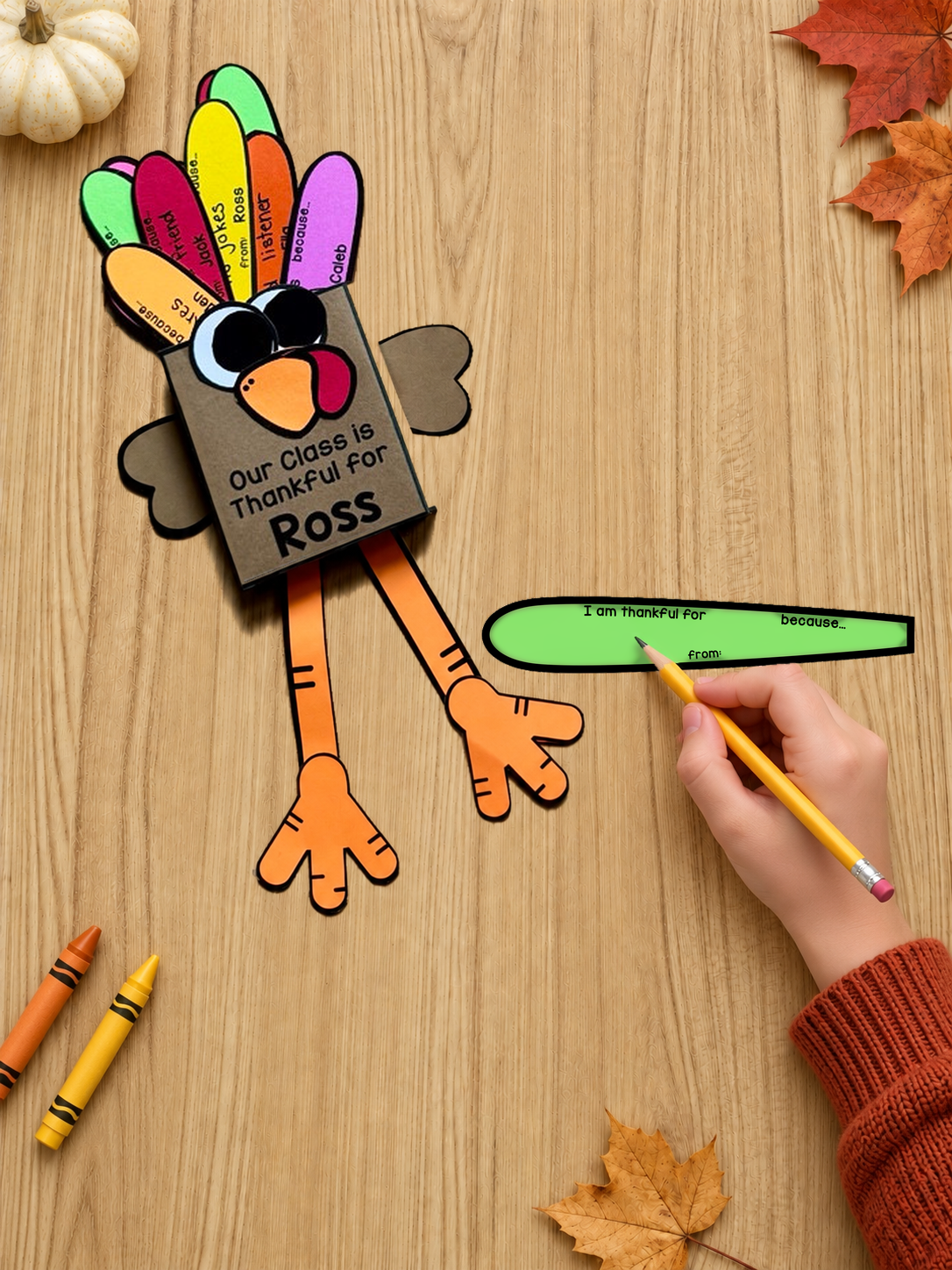
If you are using my Class Thankful Turkeys resource, the friendship feathers include spaces for the classmate’s name, a reason, and the writer’s name. The resource has turkey box, envelope, and round fan options, plus a separate Print and Color version. Choose one format before printing so preparation stays manageable.
Try the exchange across several short sessions:
- Plan who will receive messages. Use a private class checklist and a rotating schedule. Give everyone the same opportunities to be noticed and receive a message. Avoid an open choice of “write to anyone” as the only system.
- Give children time to notice. Name the classmates they will write to before a shared activity. Invite them to watch for helpful actions, without making anyone perform kindness to earn a feather.
- Talk before writing. Ask, “What did you notice?” Help children find an honest example. If they cannot think of one yet, return to it later instead of inventing praise.
- Read before exchanging. Check messages privately for clarity and unkind comparisons. Support revisions, then help children give their feathers to the intended classmates.
Keep missed sessions and absences on your checklist. A child should not end up with an empty turkey because they were away.
Make room for different writers
Preschoolers can draw an action and tell an adult about it. Write their words, then read the message back. Precut feathers or offer a larger paper feather when cutting or writing in a narrow space gets in the way.
Kindergarten writers might add a label or a short sentence. Offer names to copy and a few useful words from the class discussion. Older writers can explain how an action helped: “You showed me where the pieces go, so I could join the game.”
Children can share in a home language, use their usual communication supports, or speak privately with an adult. No one needs to share a family story, hug a classmate, or read a personal message aloud. If peer feedback feels uncomfortable, offer a teacher-supported observation or a quiet way to participate.
Add an optional preschool song
For a younger group, play “I’m Thankful” by Super Simple Songs before the discussion. Preview it for your group first.
After listening, try this quick routine: model one helpful action with a puppet, ask children what they noticed, and help them say a thank-you. Keep the example connected to the classroom so children have something concrete to draw. The puppet routine is an optional teaching suggestion, not a required part of the resource.
Count feathers without counting popularity
Keep the math separate from how many messages a child receives. Give each pair the same small set of blank paper feathers.
For counting practice, have children touch and count each feather once, then match the set to a numeral. For children ready to combine groups, place three feathers beside two more. Ask how many there are altogether and record 3 + 2 = 5.
The math goal is counting objects or combining quantities. Do not graph who received the most compliments or use feather totals to rank kindness.
Return to the words after the craft
Once the turkeys are assembled, invite children to reread their messages privately or with support. Use a few closing questions:
- What helped you remember a kind action?
- How did adding a detail make your message clearer?
- What is one helpful thing you could try tomorrow?
You can use this routine with supplies already in your classroom. If you would like the turkey templates and friendship feather pages ready to print, find my Class Thankful Turkeys activity here.