
A Thanksgiving Placemat Craft for Writing and Table Talk
If you’re planning a classroom feast, the table decorations can be part of the learning, too. This Thanksgiving turkey placemat gives little writers a sweet way to share what they’re thankful for before everyone sits down together.
My Thanksgiving placemat craft combines short writing responses with a colorful paper turkey. The finished piece can mark a child’s spot at a classroom table or head home as a cheerful keepsake. Here’s how to keep the writing, assembly, and sharing manageable for your kindergarten, first, or second grade class.
Give the writing a place to go
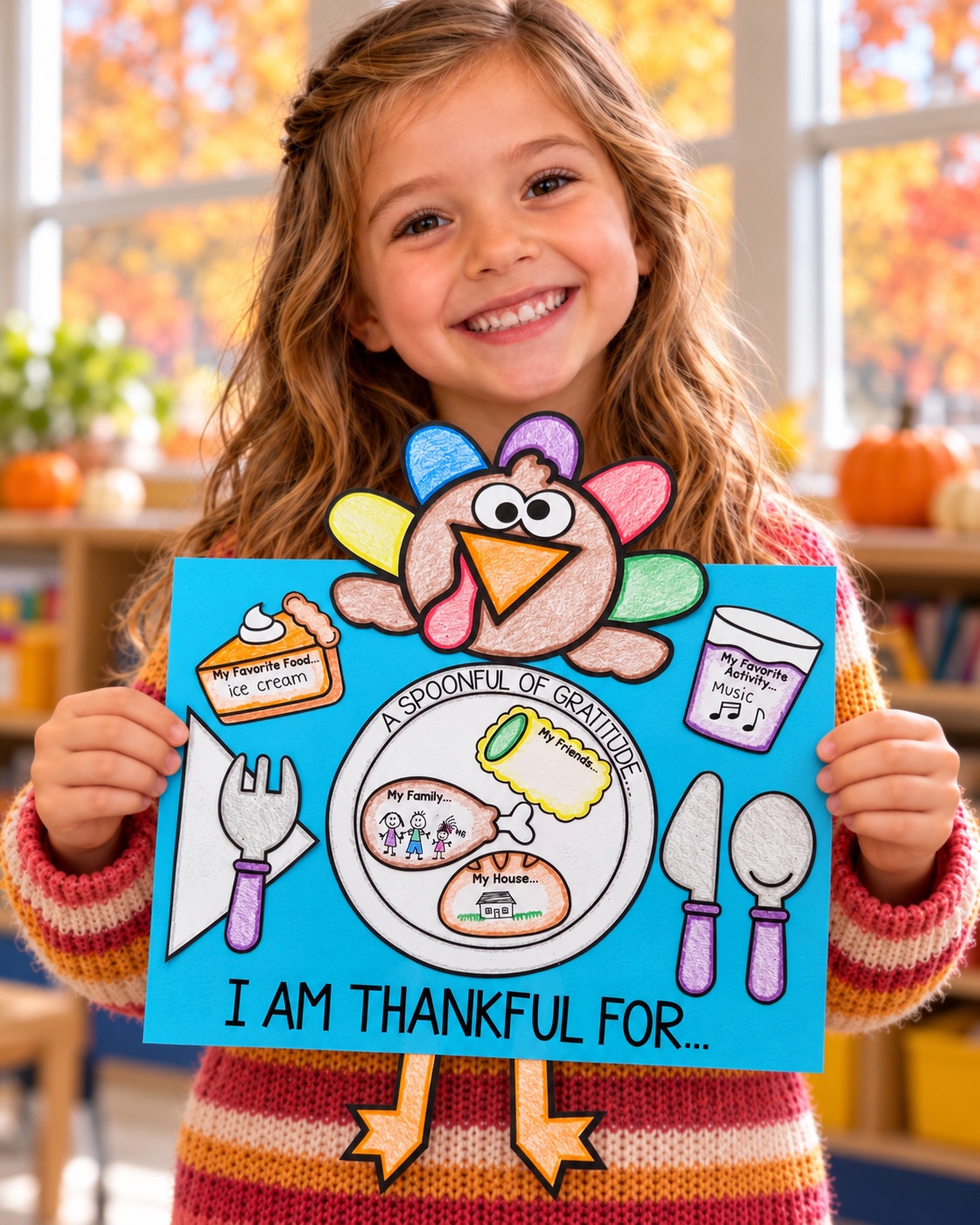
The placemat reads “I Am Thankful For…” with “A Spoonful of Gratitude…” around the plate. Food-shaped spaces invite responses about family, friends, and home. A slice of pie holds the favorite food response, and a glass holds the favorite activity response.
Before students begin, explain who will see their work. They might share it with a classmate at a classroom feast or show someone at home. Knowing that another person will read it gives students a reason to choose details they can talk about.
Walk through the prompts together, but leave room for different answers. A favorite food doesn’t have to be a Thanksgiving food. Ice cream in the pie slice is welcome! Family and home can look different for every child. If a prompt needs adjusting, you could invite a student to name a caring person or a familiar place without asking them to explain that choice to the class.
Plan the work in manageable parts
The resource includes color and black-line placemat templates. Choose your printing option before making class copies. Gather copy paper or cardstock, pencils, crayons or markers, student scissors, and glue sticks. Decide which cutting steps your students can handle independently and where you will offer help.
You could use one work period for ideas and writing, then another for coloring, cutting, and assembly. Keep each student’s pieces together in a tray or folder between sessions. Make one sample to show where the pieces go, then let the children’s color choices give each turkey its own personality.
A useful order is to talk through ideas, complete the writing, color, and then assemble. Saving glue for last keeps the writing surface flat and gives you a chance to check that students have recorded their ideas.
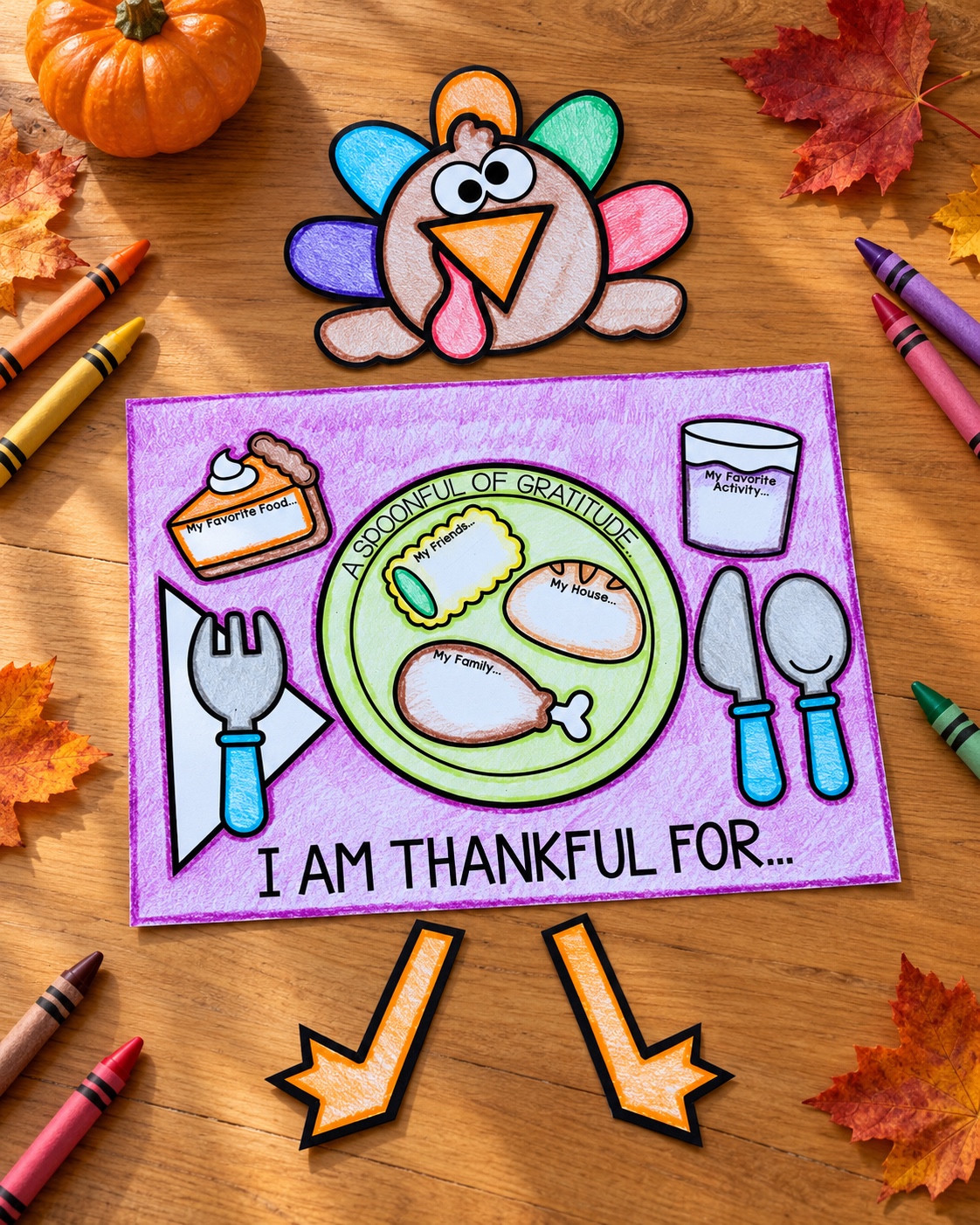
Those little turkey feet go below the mat, with the topper peeking over the top. Have students arrange the pieces before adding glue. You can model the placement once, then check a table at a time. If cutting is the part that usually slows your group down, offer help there so students can still do their own writing and coloring.
Make room for every little writer
Here are a few suggested classroom adaptations. Choose the support that fits your writers:
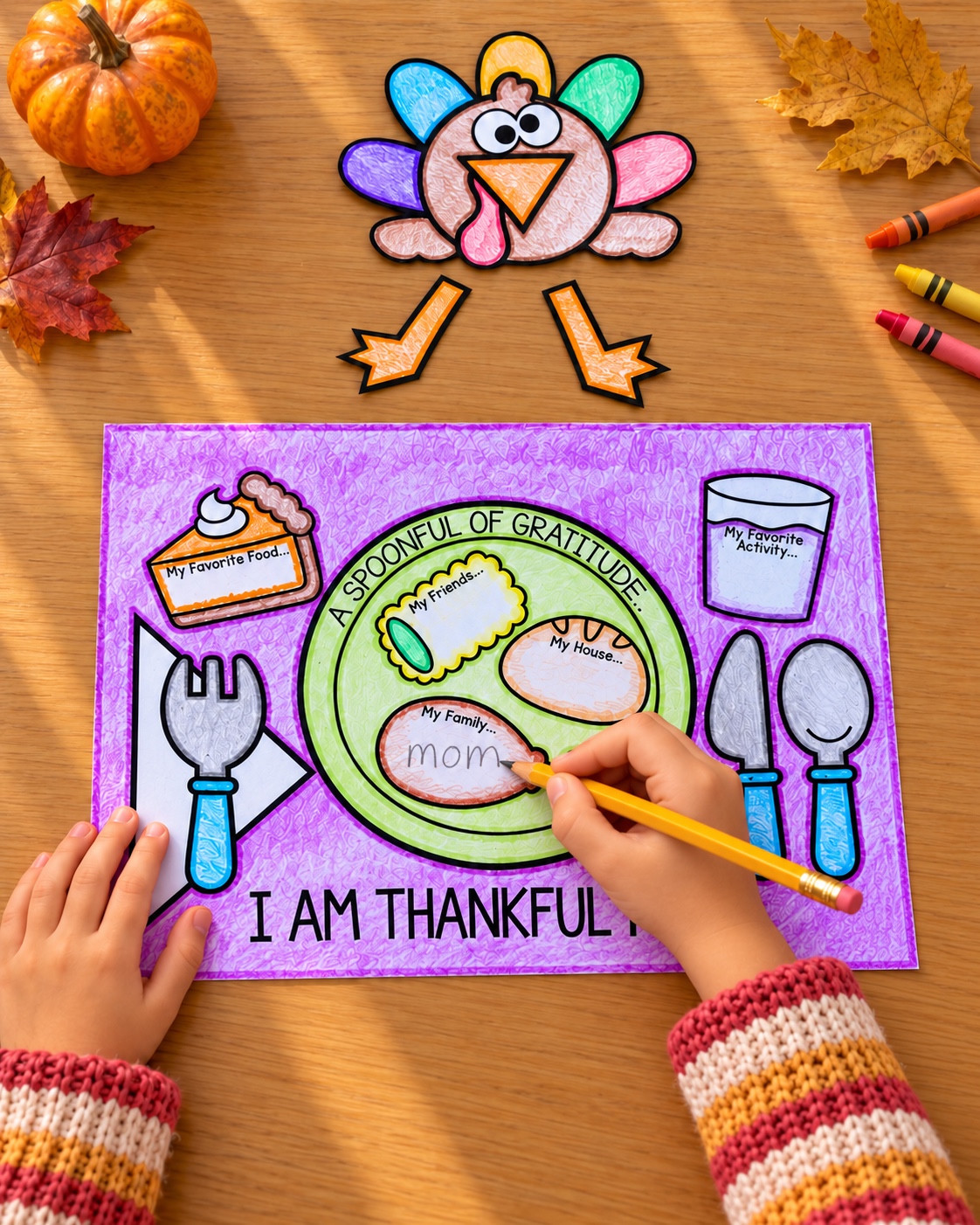
- For beginning writers: Invite a drawing and a label. Students can say their idea aloud before writing, or dictate it to an adult.
- For first grade writers: Encourage a readable word or short phrase in each space. Make a small class word bank for words students request, while leaving names and personal choices up to them.
- For students ready to add more: Ask them to explain one response using “because.” They can share that sentence aloud or write it on a separate teacher-provided piece of paper if they need more room.
A quick partner rehearsal can help: “I chose ___ because ___.” Students do not need a long paragraph in every small space. Choose a writing expectation that leaves time to read and share the finished work.
Let your table helpers do a little math
If you are using the placemats for a classroom feast, give your table helpers a real job: making sure everyone has a place. Count the people sitting at each table, then count the placemats. Does each person have one? Are there extras, or do you need more?
First and second graders can compare two tables or work out how many more placemats are needed when a guest joins. This is an optional math extension you can do with the finished crafts, with no extra worksheet required.
Make time for the conversation
If you want to laminate the finished placemats for table use, wait until the writing is complete and the glue is dry. Check that the finished shape fits your laminating supplies before making a class set.
Before covering the writing with plates, invite students to share one response with a table partner. A listener can ask, “What do you like about that?” Let students choose what they want to share.
Sending the project home instead? The children’s handwriting and favorite things are part of the keepsake, so add a name and date on the back before it heads home. You could tuck in a short teacher-written note inviting someone at home to ask about one response.
You can find my Thanksgiving placemat turkey writing craft here on TPT. Choose your printing option, set out the crayons, and save a little time for the children to share the thoughts behind their turkeys.