

All About Reindeer: Nonfiction Reindeer Activities for K–2
Need reindeer activities for kindergarten, first grade, or second grade that actually go together? I wanted a reindeer day where you could teach real science, make something cute, and still have time to get the glue sticks put away. So I put the slideshow, reader, writing pages, and crafts I’d want to use all in one place.
You can use my All About Reindeer nonfiction unit for one December reindeer day or stretch it across a winter animal study. Here’s how I’d teach it.
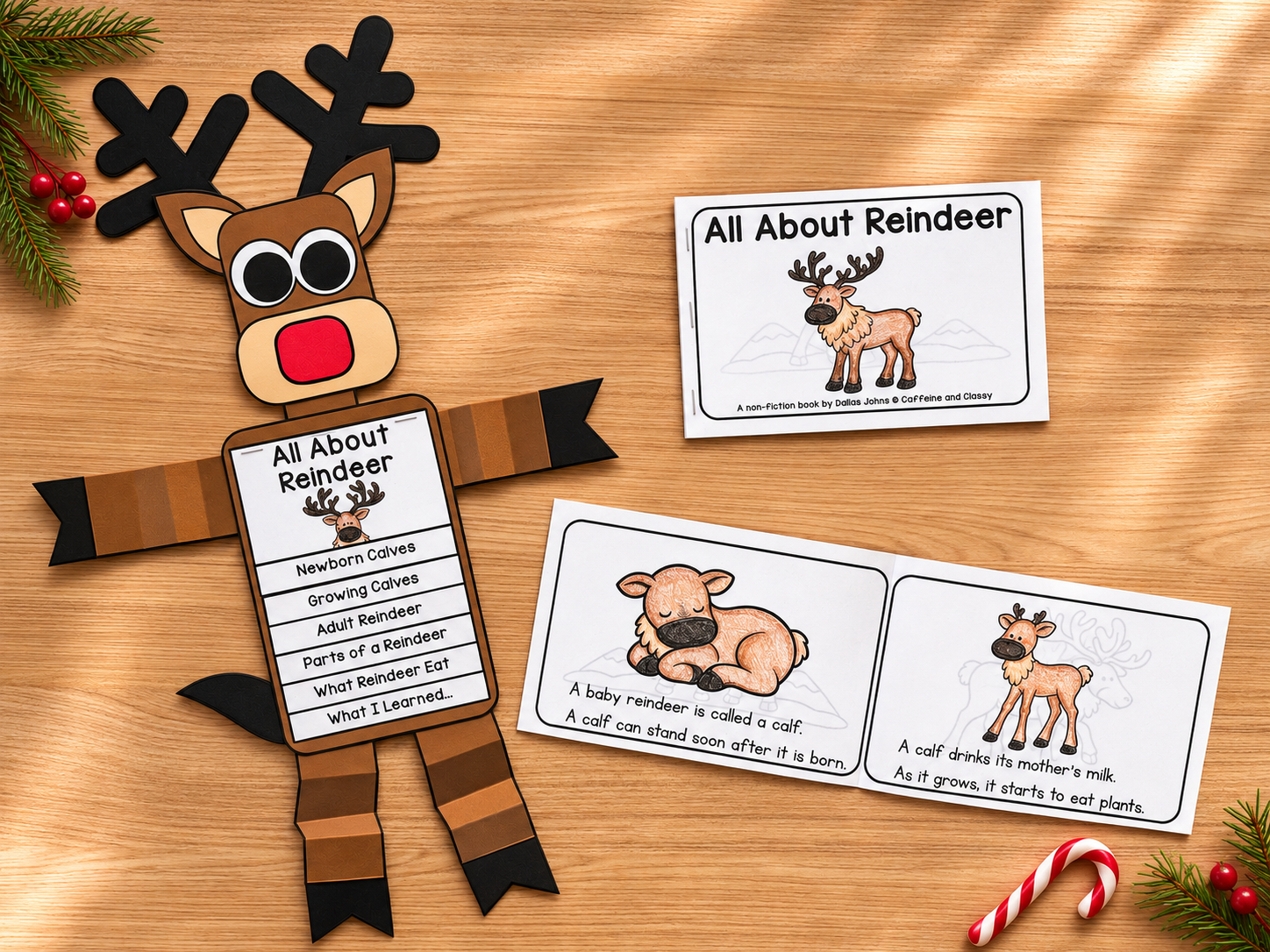
1. Start with the reindeer slideshow and nonfiction reader
Before you open the slideshow, ask, “What do you already know about reindeer?” Write down a few answers and save one question the class wants to find out. Then pull up the range map, look at where reindeer live, and talk about their habitat, what they eat, and how calves grow.
The printable mini-book gives kids a chance to see those ideas again in short sentences and pictures. After reading the calf pages, have partners finish the sentence “A calf is…” or point to one picture and share what it taught them. You can hear what they understood before you hand out a writing page.
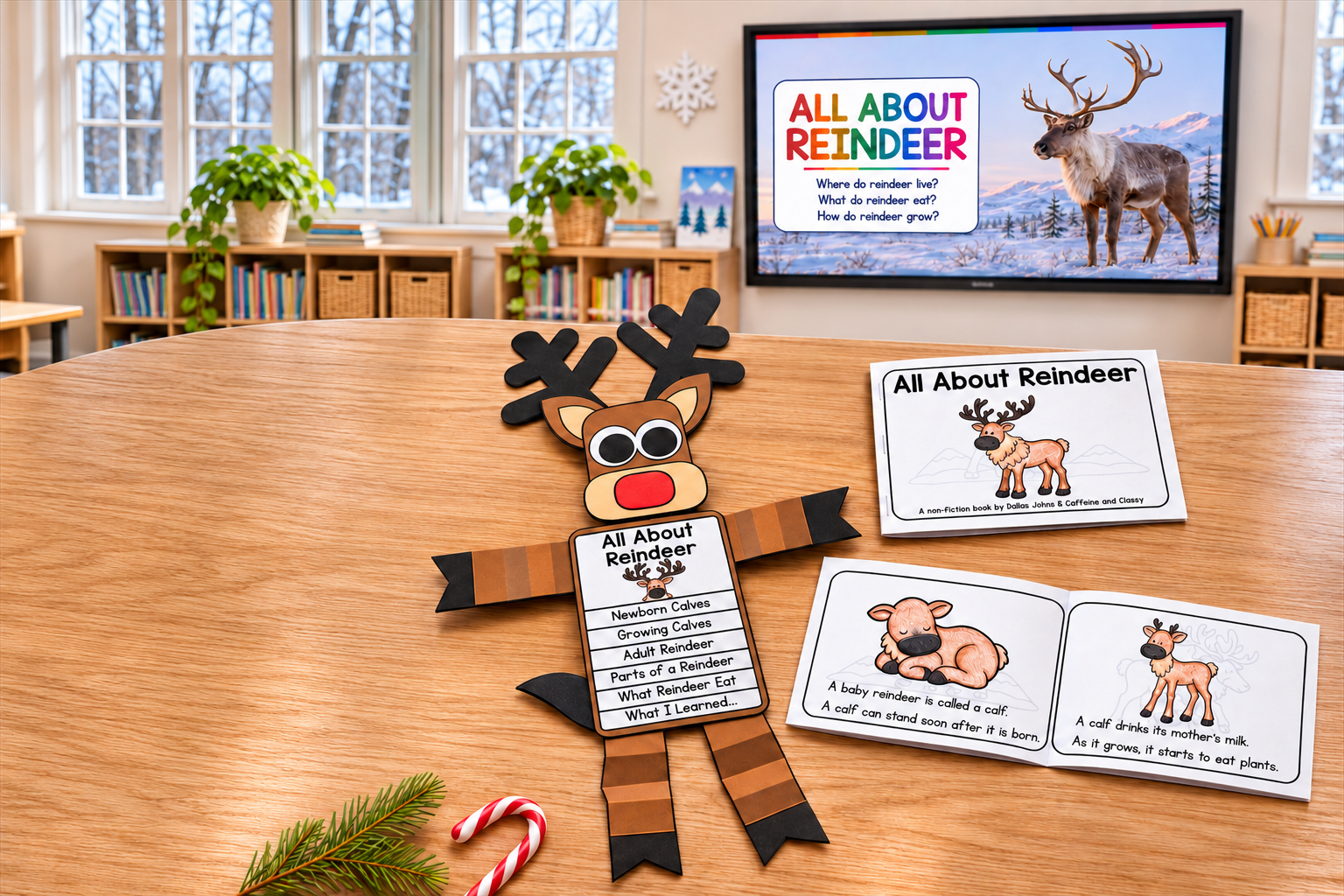
2. Build an anchor chart as you learn
You don’t have to put the whole reindeer anchor chart together before the lesson. Start with the KWL piece. Add the life cycle and labeled reindeer diagram when you get to them, and leave the picture vocabulary up where kids can actually see it. My favorite part of a chart like this is when a student goes over to find a word on their own.
On the Can/Have/Are chart, try asking for one idea in each column. If the class says “Reindeer have hooves,” follow up with “What can they do with them?” Let the kids look back at the slideshow or reader before you write down their answer.
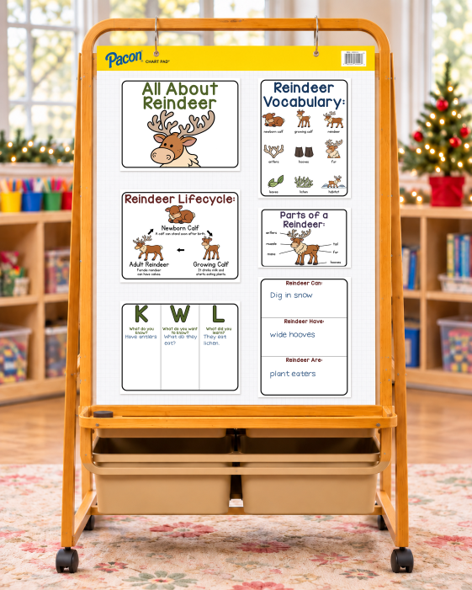
3. Choose a reindeer writing craft or a life cycle flipbook
For a quick writing lesson: Use the All About Reindeer prompt to share a real fact, or switch to If I Had a Pet Reindeer for imaginative writing. Both prompts have different writing line options and versions with or without drawing space. That way the whole class can work on the same idea, even if some kids are drawing and labeling while others are writing several sentences.
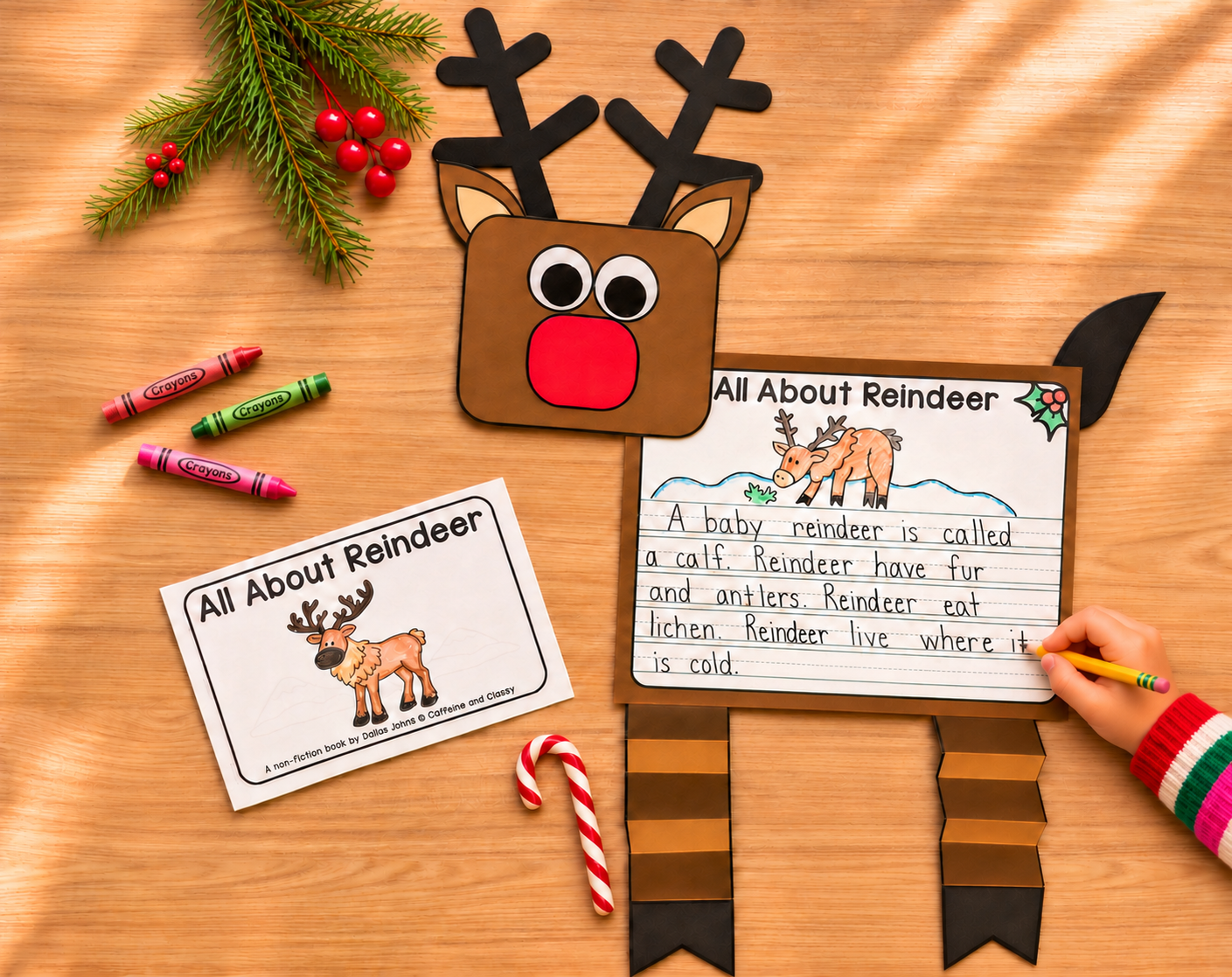
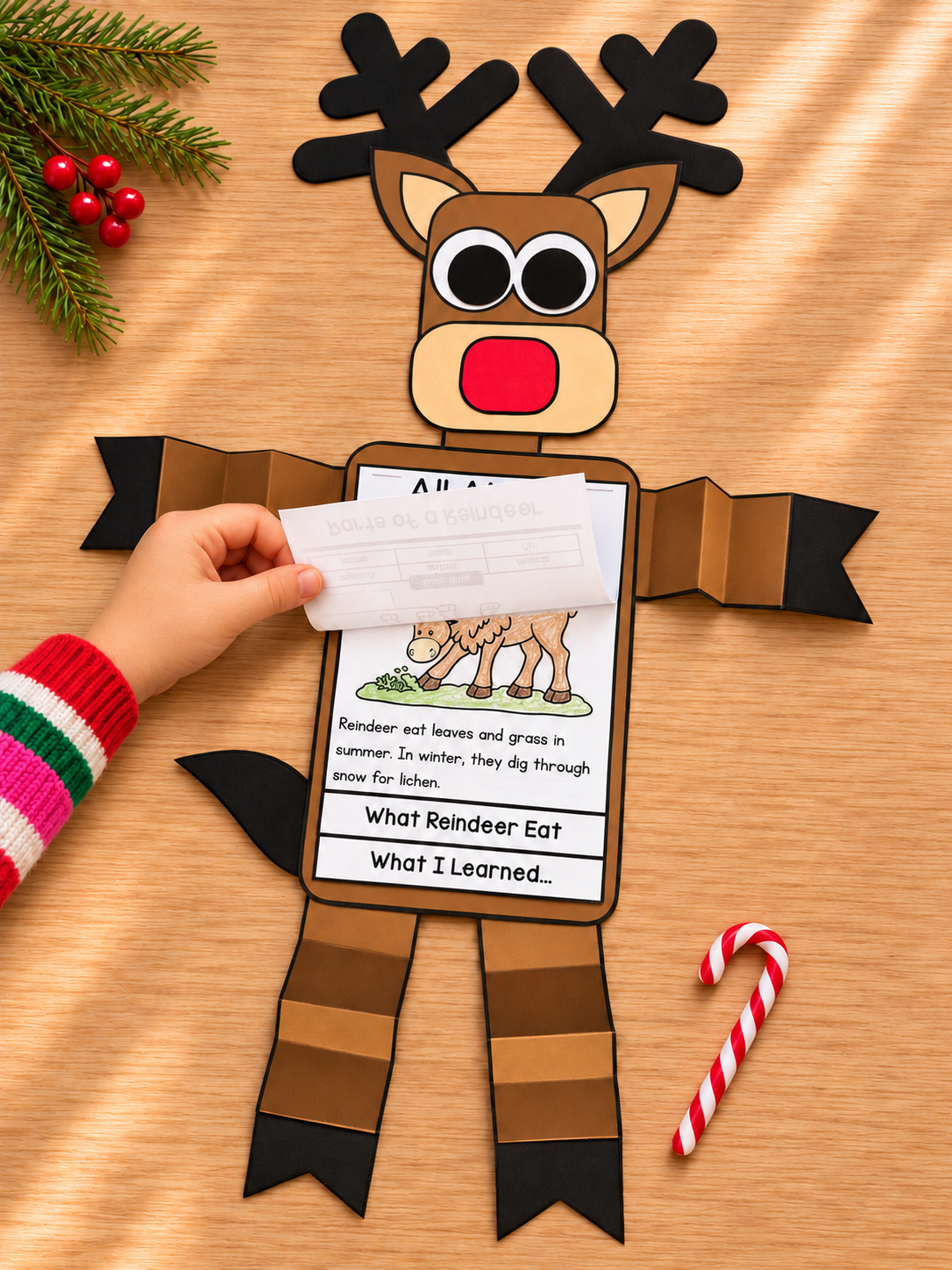
For a project you can spread out: Make the reindeer flipbook. Do the newborn calf, growing calf, and adult reindeer tabs in order, then add the body parts, food, and “What I Learned” tabs. If you’re teaching over several days, have the kids complete one or two tabs at a time.
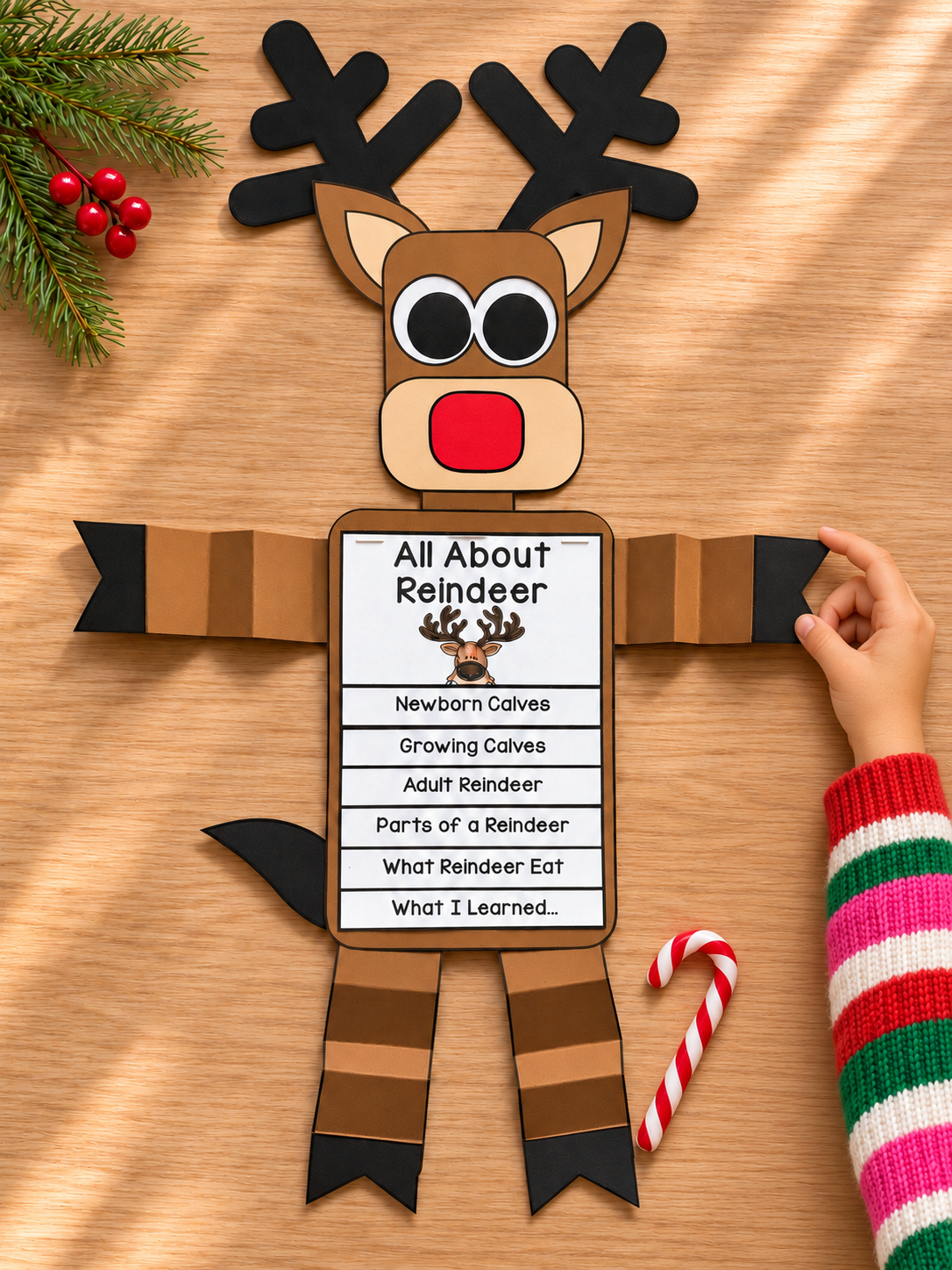
When the flipbooks are finished, let partners lift a tab and teach each other one fact. It’s a quick way to hear the difference between a student who can name the stages and one who can explain what changes as a calf grows.
4. Set up a Five Happy Reindeer pocket chart center
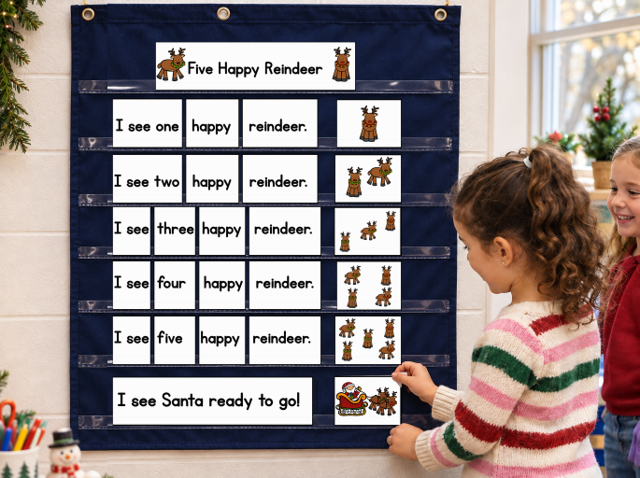
Read the Five Happy Reindeer counting reader together first. At the pocket chart, model one line: put the words in order, read the sentence, and match the picture with the right number of reindeer. Then let partners take over. This center has a Santa ending, so I’d keep it separate if you’re doing a nonfiction-only winter animal study.
What if you only have one day?
I’d teach with the slideshow, read a few pages of the mini-book, and choose the writing craft. If you have more time, build the anchor chart as you go, add the flipbook, and save the pocket chart for centers. The teaching guide includes pacing, directions, and discussion questions to help you pick what works for your class.
Get the All About Reindeer nonfiction unit on Teachers Pay Teachers. If you want to carry your reindeer day into math, my Shape Reindeer Christmas math craft is a separate activity for building, counting, and graphing 2D shapes.
And when those little reindeer head home, have each kid pick one fact to tell someone at dinner. I’d love to hear how many of them lead with the hooves!
Happy teaching!
Dallas